
The Rise of the Plastic-Free Festival: Why Biodegradable Ponchos are the New Standard in Global Event Procurement
Transform your major events with certified compostable rain ponchos. Zero-waste wholesale solutions for festival procurement. Low MOQ, custom OEM branding, and scalable eco-logistics support.

Regulatory Drivers in the EU and US Event Markets
Understanding Single-Use Plastic (SUP) Directives and how European regulations are de-listing traditional PE ponchos from approved vendor lists.
Understanding Single-Use Plastic (SUP) Directives
The European Union’s Single-Use Plastic Directive represents a fundamental shift in how major venues approach event logistics. Starting in 2021, municipalities across the continent began removing traditional polyethylene ponchos from approved vendor catalogs, creating an immediate procurement challenge for festival organizers who had relied on cheap, disposable rain protection for decades. The directive targets items that can be replaced with readily available sustainable alternatives, and compostable rainwear sits squarely in this category.
Meanwhile, the United States presents a patchwork of regulations that vary significantly by state and municipality. California, New York, and several other states have enacted legislation restricting single-use plastics at large gatherings, while major venue operators have implemented their own sustainability mandates independent of state law. The trend is unmistakably moving toward restriction, and forward-thinking procurement officers are already transitioning their supply chains to avoid the scramble that inevitably occurs when compliance deadlines approach.
Municipal Mandates and Venue Permitting
City-wide plastic bans in major event hubs like London, Berlin, Amsterdam, and San Francisco have fundamentally altered the procurement cycle for outdoor events. These municipalities now require event permits to include detailed waste management plans that demonstrate how organizers will divert materials from landfill. Permit applications now scrutinize your sourcing strategy, and failure to present a credible zero-waste plan can result in permit denial or costly retrofit requirements.
For procurement managers, this means building relationships with suppliers who can provide documentation trails that satisfy municipal auditors. Biodegradable rain ponchos come with certification documentation—EN 13432 in Europe, ASTM D6400 in North America—that demonstrates compliance with composting standards.
Compliance Documentation for Large-Scale Tenders
When responding to large-scale tenders for major events, procurement teams must demonstrate compliance with international composting standards. The EN 13432 standard, required throughout the European Union, specifies that packaging materials must degrade by at least 90% within six months in industrial composting conditions. ASTM D6400 serves the same purpose in North American markets. Both certifications are now mandatory for vendors supplying rain protection to municipal events and publicly-funded venues.
The documentation requirements extend beyond simply possessing certificates. Major tenders often require proof of ongoing compliance, including third-party audit reports, factory inspection records, and traceability documentation linking specific production batches to raw material sources.
Material Science: Beyond Petroleum-Based Plastics
Exploring PLA vs. PBAT biopolymers and the technical considerations for bulk compostable rain ponchos for eco-festivals.
PLA vs. PBAT: Choosing the Right Biopolymer
The science behind compostable rainwear has advanced dramatically, but understanding the difference between polymer types is essential for making informed procurement decisions. Polylactic Acid (PLA) derives from fermented cornstarch and offers excellent clarity—making it ideal for security-sensitive venues requiring transparent ponchos—while polybutylene adipate terephthalate (PBAT) provides superior flexibility and drape characteristics that customers find more comfortable for extended wear. Most commercial compostable rain ponchos use blends that optimize both properties.
From a technical specifications standpoint, modern biopolymer blends achieve waterproof ratings comparable to traditional polyethylene. The hydrostatic head measurement—the industry standard for waterproof performance—typically ranges from 1500mm to 3000mm for quality compostable rainwear, easily meeting the requirements for outdoor events in moderate to heavy rain conditions.
The Degradation Timeline for Cornstarch Polymers
One of the most common questions from procurement officers concerns shelf life and degradation timelines. Properly manufactured PLA/PBAT blends are stable under normal storage conditions for 12-18 months, meaning you can order bulk inventory well in advance of your event season without concern about premature degradation. The critical factor is exposure to sustained temperatures above 50°C (122°F), which triggers the composting process.
The actual composting process, once the ponchos reach end-of-life, requires specific conditions to achieve the advertised degradation timeline. Under optimal conditions in industrial facilities, quality compostable rain ponchos will fully degrade within 90-180 days, leaving no toxic residues.
Integrating Bulk Compostable Rain Ponchos for Eco-Festivals
For multi-day outdoor events, the choice of rain protection directly impacts your sustainability metrics and attendee experience. Bulk compostable rain ponchos for eco-festivals have emerged as the primary SKU for progressive event organizers who understand that weather protection shouldn’t come at the cost of environmental responsibility. The economics have also become compelling—with volume pricing and improved manufacturing efficiency, the cost premium over traditional plastic has narrowed significantly.
Implementation requires coordination with your waste management partners to ensure proper collection and composting. Many waste management companies now offer specialized services for bio-based event materials.

Solving the Security and Visibility Paradox
Maintaining high clarity in biodegradable materials to satisfy stadium security protocols while meeting green mandates.
Transparency Standards for Restricted Entry Venues
Stadium security protocols present a unique challenge for sustainable rain protection: many venues require clear bags and transparent outerwear to enable quick visual inspection by security personnel. This requirement exists for legitimate safety reasons, and it creates tension with traditional sustainability approaches. The good news is that modern biopolymer technology has solved this paradox through “Optical Grade” compostable materials that achieve 95%+ transparency.
When sourcing for security-sensitive venues, you need to specify clear biodegradable ponchos that meet both your sustainability commitments and the venue’s visibility requirements. Not all compostable materials achieve the same clarity levels—some have a slight milky or yellowish cast that security teams may flag.
Sourcing Wholesale Clear Ponchos for Security-Sensitive Venues
Wholesale clear ponchos for security-sensitive venues that meet both green mandates and safety requirements represent a growing segment of the sustainable event supply market. The key is finding suppliers who offer certified compostable options in truly transparent formulations. Our OEM program specifically addresses this need, offering “Optical Grade” clear ponchos that satisfy stadium security requirements while maintaining full biodegradability and compostability certifications.
The procurement process for security-sensitive venues requires additional documentation. You’ll need to provide venue security teams with certification documentation proving the poncho’s transparency rating and compostability credentials.
Haze Factors and Visual Inspection Efficiency
Beyond basic transparency, procurement officers should understand how biopolymer clarity affects throughput speed at high-volume security checkpoints. Even slightly hazy materials can slow inspection times, creating bottlenecks that frustrate attendees and extend entry delays. The difference between premium “Optical Grade” and standard clear compostable materials is measurable in checkpoint efficiency—venues report that high-clarity ponchos reduce individual inspection times by 15-20 seconds per attendee.
This efficiency factor has direct financial implications. At a 50,000-attendee event with poncho distribution, the time savings multiply significantly.
Branding the Movement: Customization in Green Gear
Soy-based inks and eco-friendly printing techniques that maintain compostability while showcasing sponsor branding.
Soy-Based Inks and Eco-Friendly Printing Techniques
One of the most significant advances in sustainable event merchandise is the development of printing technologies that don’t compromise compostability. Traditional petroleum-based inks contain volatile organic compounds (VOCs) that contaminate the biodegradation process, meaning even a compostable poncho with conventional printing would fail certification. Soy-based inks and water-based coatings solve this problem, allowing full-color branding without sacrificing environmental credentials.
The printing process itself has also evolved to meet the requirements of biopolymer materials. Heat-sensitive compostable films require careful temperature control during printing to avoid material damage, and specialized equipment with adjustable heat settings is necessary for optimal results.
Designing Custom Printed Rain Macs for Outdoor Marketing
Custom printed rain macs for outdoor marketing that emphasize the sponsor’s commitment to sustainability represent powerful brand activation opportunities. When attendees wear ponchos featuring sponsor logos at rain-soaked events, they become walking billboards—but the sustainability angle adds extra value. Corporate sponsors increasingly seek partnerships that align with their environmental, social, and governance (ESG) commitments.
The design considerations for sustainable rainwear differ somewhat from conventional merchandise. Print areas may be limited to specific zones where ink adhesion works optimally with biopolymer materials.

Step-and-Repeat Patterns for Social Media Virality
The “Green Festival” aesthetic has become a powerful driver of organic brand impressions on platforms like TikTok and Instagram. When attendees post photos and videos featuring sustainability-focused merchandise, they become ambassadors for both the event and its sponsors. Creating merchandise designed specifically for social media virality—step-and-repeat patterns, distinctive color schemes, hashtag-friendly designs—amplifies this effect exponentially.
Consider incorporating elements that encourage attendee-generated content: QR codes linking to sustainability impact dashboards, augmented reality experiences triggered by poncho designs, or simply bold visual statements that photograph well.
Emergency Logistics and Crowd Management
Data-driven inventory planning based on historical weather patterns and ticket sales for high-volume attendance.
Forecasting Ratios for High-Volume Attendance
Accurate forecasting of rain gear requirements represents one of the most challenging aspects of event logistics. Order too few, and attendees suffer in inclement weather—a recipe for negative reviews and potential safety concerns. Order too many, and you’re stuck with excess inventory that may not meet compostability standards if stored too long. The solution lies in data-driven forecasting that combines historical weather data, ticket sales patterns, and venue-specific factors.
Industry benchmarks suggest planning for 25-40% rain gear distribution at outdoor events in regions with unpredictable weather, scaling up to 60%+ for events during traditionally wet seasons. However, these ratios vary significantly based on factors like indoor venue access, ticket price point, and advance weather forecasts.
Deploying Emergency Rain Gear for Stadium Events
Emergency rain gear for stadium events with a focus on rapid distribution and zero post-event waste requires specialized logistics planning. Unlike festival settings where attendees can purchase gear at will, stadium events often require pre-positioning inventory at specific distribution points while maintaining security protocols. The distribution system must be fast enough to serve thousands of attendees during halftime or between events without creating dangerous crowding.
Many venues now require that emergency rain gear meet the same sustainability standards as primary merchandise, meaning compostable ponchos are increasingly the default choice for weather contingencies.
Pallet Optimization and Rapid Handout Protocols
Maximizing the number of units per shipping container directly impacts your carbon footprint and total logistics costs. Standard pallet configurations for poncho boxes have been optimized through years of supply chain experience, with our standard configuration achieving 4,800 units per pallet (48 boxes of 100 each). This density minimizes shipping frequency and reduces the per-unit carbon contribution from transportation.
Rapid handout protocols ensure efficient distribution without creating bottlenecks. Pre-counted bundles speed transaction times at distribution points, while clear signage directing attendees to multiple distribution locations prevents queuing.
Protecting the Workforce: Staff Eco-Compliance
Sourcing eco-materials that withstand 12+ hours of active-duty use for event personnel and volunteers.
High-Durability Requirements for Event Personnel
Event staff and volunteers face rain exposure conditions far more demanding than typical attendee needs. Security personnel, medical teams, and operations staff may remain on duty for 12+ hours regardless of weather, requiring rain gear that maintains performance throughout extended shifts. Standard disposable ponchos—even compostable ones—often fail under these conditions, developing tears at stress points or losing waterproof integrity after hours of continuous wear.
Our industrial-grade compostable rainwear addresses these requirements through reinforced construction at high-stress points, thicker material weights, and ergonomic design features that accommodate the movement patterns of active duty personnel.
Integrating High-Visibility Rain Gear for Festival Staff
High-visibility rain gear for festival staff and volunteers that utilizes recycled reflective components provides essential safety functionality without compromising sustainability goals. Many jurisdictions require high-visibility clothing for personnel working in proximity to vehicle traffic or large crowds, and these requirements don’t disappear when the weather turns wet. Our hi-vis compostable rainwear incorporates recycled reflective materials that meet ANSI/ISEA 107 Class 2 or Class 3 requirements.
The reflective elements on our staff rain gear are designed to remain functional throughout the product lifecycle while still allowing for proper composting at end-of-life.
Unified Aesthetics: Staff vs. Attendee Tiers
Creating a hierarchy of rainwear that maintains brand identity while providing superior protection for workers requires thoughtful design coordination. The visual relationship between staff and attendee rain gear should communicate organization and professionalism while clearly distinguishing between roles. Our customization team works with event organizers to develop cohesive design systems that achieve these goals through strategic use of color, logo placement, and detailing.
The practical implementation often involves differentiated products for different groups: basic attendee ponchos optimized for cost and sustainability, mid-grade options for VIP areas, and premium reinforced gear for staff.
The Portability Factor: UX for Concert-Goers
Overcoming the bulky nature of early biodegradable plastics for easier transport and seamless merchandise integration.
Miniaturizing Sustainable Solutions

Early biodegradable plastics suffered from a reputation for bulkiness—materials needed greater thickness to achieve equivalent strength, and the resulting ponchos took up excessive space in bags and pockets. This presented a significant barrier to adoption for concert-goers who value convenience and minimal carry load. Modern biopolymer technology has largely solved this problem through advanced extrusion techniques that produce ultra-thin materials with exceptional strength-to-weight ratios.
Today’s premium compostable ponchos pack to roughly the size of a large smartphone, fitting comfortably in jacket pockets, backpacks, and clutch bags. This portability improvement has been essential to mainstream adoption.
Merchandising Lightweight Pocket-Size Ponchos for Concert-Goers
Lightweight pocket-size ponchos for concert-goers that fit seamlessly into merchandise bundles represent a significant revenue opportunity for event organizers. Our compact poncho designs are optimized for point-of-sale convenience: small enough to display in merch booths alongside smaller items like stickers and patches, lightweight enough to include in VIP gift bags without adding significant cost, and premium enough to command solid retail prices.
The merchandising strategy extends beyond traditional sales channels. Some event organizers have successfully positioned compact ponchos as essential “event prep” items, encouraging advance purchase as part of the ticket transaction.

Packaging Innovation: Cardboard vs. Bioplastic Sleeves
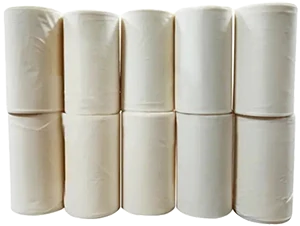
Selecting 100% plastic-free packaging that maintains product integrity during transit completes the sustainability circle. Traditional poly-bagging of ponchos—while convenient—creates the very waste problem that compostable rainwear is meant to solve. Our packaging options include cardboard sleeves made from recycled materials, paper bands, and cornstarch-based film that maintains compostability credentials throughout the product lifecycle.
The choice between packaging options involves tradeoffs between cost, protection, and sustainability credentials. Cardboard provides excellent product protection and is widely recyclable, while paper bands minimize material use and compost easily.
Supply Chain Resilience and Lead Times
Planning cycles, seasonal pricing, and the true cost calculation for regional versus overseas OEM programs.
Managing MOQ for Custom Biopolymer Extrusions
Why procurement teams must plan further ahead for eco-materials than for standard PE: The specialized nature of biopolymer manufacturing means that custom runs require longer lead times than conventional plastic production. Our minimum order quantities (MOQs) for custom biopolymer extrusion start at 5,000 to 10,000 units, with actual minimums varying based on specifications like thickness, color, and printing requirements. Planning your procurement calendar 4-6 months ahead of event dates is now essential for custom orders.
The MOQ exists because biopolymer production requires equipment cleaning and material transitions that aren’t necessary with dedicated PE lines. Running a custom color requires purging the extrusion system multiple times to achieve color accuracy.
Seasonal Fluctuations in Raw Material Costs
How the harvest of agricultural by-products (corn, sugarcane) impacts bulk pricing for bioplastics creates seasonal cost dynamics that procurement officers should understand. PLA production relies on cornstarch, which follows agricultural commodity pricing cycles. Harvest (typically fall seasons in Northern Hemisphere growing regions) can affect raw material availability and pricing, with lowest prices generally available in late fall through early winter.
Beyond agricultural cycles, demand fluctuations around peak event seasons create pricing pressure. Strategic procurement—placing orders during lower-demand windows—can yield savings of 10-15% compared to last-minute ordering.
Regional Sourcing vs. Overseas OEM Programs
Calculating the “True Cost” of shipping and the carbon impact of different manufacturing hubs requires comprehensive analysis beyond unit pricing. While Asian manufacturing often offers lower unit costs, transportation emissions and longer lead times can offset these advantages. European manufacturing typically offers faster delivery and lower transportation carbon footprint, but at premium unit pricing.
The total cost calculation should include all logistics components: freight costs, duty and customs fees, insurance, quality control travel costs, and the financial cost of capital tied up in longer supply chains. We help clients run these analyses objectively.
The Economic Case for Green Premiums
Comparing premium material costs against potential fines, sponsor value, and merchandise margin opportunities.
Justifying the Landed Cost of Biodegradables
Comparing the cost of premium materials against potential fines for plastic non-compliance requires a total cost of ownership (TCO) approach that many procurement officers find surprising. When you include potential permit denials, fines for non-compliant waste management, negative publicity, and sponsor relationship impacts, the premium for sustainable materials often becomes a net savings. Major events have faced six-figure fines for plastic violations.
The economics become even more compelling when you factor in waste disposal costs. Many municipalities now charge premium rates for waste from events, with composting disposal often costing less than landfill tipping fees.
Enhanced Sponsor Value through Eco-Alignment
Attracting high-tier corporate partners by offering “Zero-Waste” sponsorship opportunities represents a significant revenue lever that sustainable event management unlocks. Major brands increasingly prioritize environmental partnerships as part of their ESG messaging strategies, and events that can demonstrate genuine sustainability credentials become more attractive sponsorship properties. The premium positioning that compostable rainwear provides can justify higher sponsor asking prices.
The sponsorship value extends beyond cash to include in-kind contributions and relationship benefits. Brands aligned with sustainability initiatives often provide additional marketing support and long-term partnership commitments.
Resale Value and Merchandise Margin Optimization
Why attendees are willing to pay a premium for compostable gear over disposable plastic: The perceived value difference is substantial. Attendees understand that sustainable products typically perform better and last longer, and they’re willing to pay for those benefits. Our premium compostable ponchos command 25-40% higher retail prices than conventional alternatives while maintaining strong sales velocity.
The merchandise margin optimization extends beyond initial sales to include reduced markdown risk. Because sustainable products maintain value perception throughout the event, organizers face less pressure to discount unsold inventory.

Post-Event Logistics: The Circular Economy
Industrial composting partnerships, collection strategies, and impact reporting for corporate stakeholders.
Setting Up Industrial Composting Partnerships
The importance of having a downstream partner to process thousands of used bio-ponchos cannot be overstated. The sustainability story falls apart if your compostable ponchos end up in regular landfill, which is why establishing proper composting relationships is essential to credible green event management. Our program includes partnerships with commercial composting facilities across major event markets.
Finding the right composting partner involves evaluating several factors: capacity to handle your volume, certification credentials, proximity to your event, and willingness to provide documentation for your impact reporting.
On-Site Collection Strategies and Bin Placement
Reducing contamination to ensure the bioplastic batch is successfully processed requires thoughtful on-site collection design. Attendees need clear, convenient options for returning used ponchos, and the collection system must prevent cross-contamination with regular waste streams. Our event planning guides include detailed collection protocols optimized for different venue configurations.
Bin placement significantly impacts collection rates. High-visibility stations at exits, near restrooms, and at transition points between venue areas capture the highest percentage of returns.
Impact Reporting for Corporate Stakeholders
Translating “Tons of Plastic Diverted” into marketing collateral and annual reports creates powerful communications assets for multiple audiences. Sponsors want to know the environmental impact of their association, attendees want confirmation that their choices matter, and municipal permitting authorities want documented compliance.
The metrics that resonate most include plastic waste diverted from landfill, estimated carbon emissions avoided, and water savings compared to conventional disposal. These numbers become core elements of sustainability communications.
Technical Comparison: Bioplastics vs. Recycled PET
End-of-life realities, logistics efficiency, and waterproof performance data comparing compostable and recycled alternatives.
End-of-Life Realities: Recycling vs. Composting
Why rPET may still end up in landfills compared to the compostable alternative requires honest assessment of recycling infrastructure realities. While recycled PET (rPET) represents progress over virgin plastic, the actual recycling rates for event-generated waste remain disappointingly low. Most rPET collected at events ends up contaminated with food waste, rendering it unrecyclable.
Compostable materials offer a fundamentally different value proposition: even if collection isn’t perfectly executed, the material will safely degrade rather than persist for centuries. This makes compostability a more reliable end-of-life strategy.
Weight and Storage Efficiency Benchmarks
How biopolymers compare in freight density affects total logistics costs in ways that aren’t always obvious. Modern compostable rainwear achieves comparable packability to conventional plastic—some premium formulations actually pack smaller due to thinner material requirements. The weight differential is negligible.
Storage requirements also align closely between compostable and conventional options. The primary difference is shelf life: compostable materials have recommended storage windows of 12-18 months versus indefinite for conventional plastic.
Waterproof Ratings (PSI and Hydrostatic Head)
Technical data proving that “Eco” doesn’t mean “Leaking” addresses a common concern from procurement officers who worry that sustainable materials sacrifice performance. The reality is that modern biopolymer films achieve waterproof ratings fully comparable to conventional materials. Our standard compostable rainwear is rated at 1500mm hydrostatic head, while premium options reach 3000mm for heavy rain conditions.
These ratings are verified through independent laboratory testing, and we provide full documentation upon request. Our return rates and complaint levels track with conventional products.
Sustainability vs. Logistics: Performance Matrix
Frequently Asked Questions
Common questions from procurement professionals about bulk compostable rainwear for events.
The Future of Ephemeral Weather Protection
Scaling Solutions for the Next Decade
Predicting the total phase-out of PE ponchos in the professional event sector by 2030 reflects both regulatory pressure and market evolution. Major venues are already implementing restrictions, and the trajectory is clear: the future of event rain protection is sustainable. Procurement officers who transition their supply chains now will gain competitive advantages through established vendor relationships, optimized logistics processes, and accumulated expertise.
The scaling challenge involves both supply and demand. Manufacturers are investing in production capacity to meet projected demand growth, while event organizers are increasingly requiring sustainable options in their procurement specifications.
Building Long-Term OEM Partnerships
The value of securing a reliable supplier for consistent green-compliant stock cannot be overstated in an era of tightening regulations and rising demand. Our OEM partnership program offers priority production allocation, consistent pricing across seasons, and dedicated account management that helps you navigate the evolving landscape of sustainable event procurement.
Partnership benefits extend beyond simple supply security to include collaborative product development, sustainability reporting support, and strategic planning assistance. As your events grow and evolve, your supplier relationship should scale with you.
The Ethical Edge in Modern Event Management
Final thoughts on leadership through sustainable procurement: The choice to provide compostable rainwear at your events is more than a logistics decision—it’s a statement about your organization’s values and your commitment to environmental responsibility. Attendees, sponsors, and communities are watching, and they notice when event organizers make choices that align with their stated values. This ethical positioning creates brand equity that transcends individual transactions.
The transition to sustainable rain protection is not without challenges, but the rewards—both tangible and intangible—justify the effort. With proper planning, quality suppliers, and thoughtful execution, your events can lead the industry toward a future where weather protection and environmental responsibility go hand in hand.

Explore our complete collection of wholesale solutions