
OEM & ODM Raincoat Factory Audit BSCI
The Complete Buyer’s Guide for Ethical Manufacturing & Bulk Procurement
Introduction: The Complete Guide to BSCI Raincoat Manufacturing
When you’re sourcing for retail, industrial raincoats—whether workwear, outdoor gear brands, or promotional use—one thing becomes painfully clear: not all factories are created equal. You can find thousands of rainwear suppliers across Asia, especially in China, Vietnam, Myanmar, and Bangladesh. But when you dig deeper, you quickly realize that only a small percentage operate with true ethical standards, proper worker protections, and transparent management systems. That’s where BSCI-audited factories come into the spotlight. They aren’t just making raincoats—they’re doing it the right way, following globally recognized guidelines for responsible, ethical, and sustainable production.
Why This Guide Matters for Your Business
Whether you’re importing raincoats for retail, promotional events, outdoor gear stores, or industrial safety programs, your success depends on choosing the right supplier. A poorly chosen factory can cause shipment delays, product defects, compliance violations, customs issues, reputational harm, and supply chain instability.
What Is BSCI and Why It Matters
Understanding the BSCI Certification
BSCI stands for Business Social Compliance Initiative, created by amfori, one of the world’s largest trade associations for open and sustainable commerce. BSCI is not a product certification. It’s a factory audit that evaluates how responsibly and ethically a factory operates.

BSCI Audit Process
Professional auditors conduct comprehensive inspections of factory conditions, worker treatment, and compliance systems.

Factory Compliance
BSCI-certified factories maintain high standards for worker safety, fair wages, and ethical management practices.
How BSCI Protects Workers & Ensures Ethical Production
| Factory A (BSCI-Compliant) | Factory B (Non-Compliant) |
|---|---|
| Safe working conditions | Overwork employees |
| Formal contracts | Engage in underpayment |
| Regulated working hours | Hire underage workers |
| Proper safety gear | Ignore safety standards |
| Clean dormitories | Lack proper equipment maintenance |
| Proper chemical storage | Store chemicals improperly |
Why European Buyers Require BSCI-Compliant Factories
Major European retailers such as Carrefour, Lidl, Aldi, Metro, Decathlon, Obi, Bauhaus, and Hornbach won’t even onboard a supplier unless they’re BSCI audited or hold equivalent certifications like SMETA or WRAP.
Overview of OEM & ODM Raincoat Manufacturing
What OEM Production Looks Like
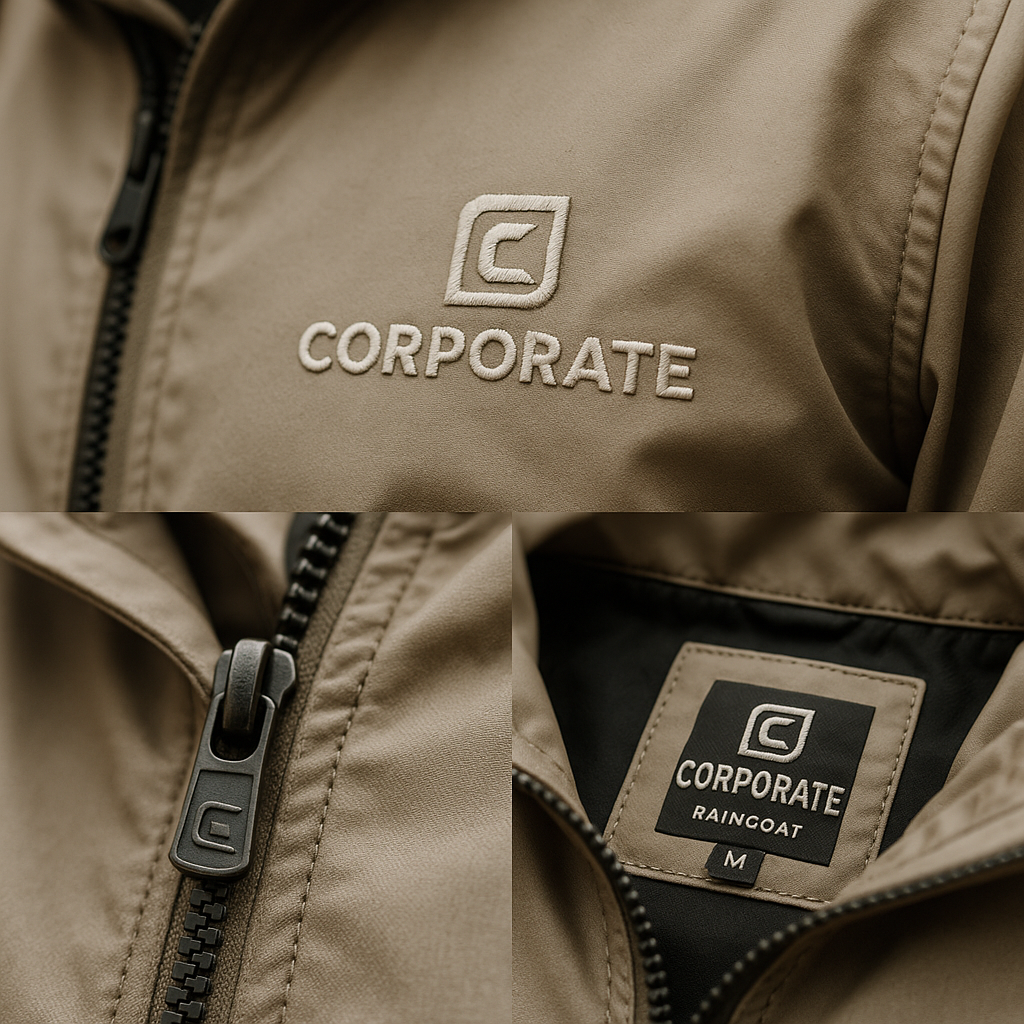
OEM, or Original Equipment Manufacturer, is the straightforward “you design it, we produce it” model. You come prepared with detailed tech packs, specifications, materials, seam-sealing instructions, logo placement guides, and sizing charts.


How ODM Helps You Develop Custom Rainwear
ODM, or Original Design Manufacturer, is the “factory helps design it for you” model. ODM factories already have ready patterns, sample designs, material libraries, and fit blocks. You simply select a style you like, then customize it with your branding elements.
When to Choose OEM vs. ODM
Choose OEM if:
• You have your own designers
• You want full control
• You need unique styles
• Working with higher budgets
• Technical rainwear required
Choose ODM if:
• Enter market quickly
• No design team
• Want low MOQs
• Building promotional products
• Testing new styles
Hybrid Model:
• ODM first → Market test
• OEM for scalability
• Reduces risk
• Saves time and cost
• Real consumer feedback
Brand Reputation & Transparency
In today’s world, brand reputation travels fast—sometimes faster than your products. When you partner with a BSCI-audited factory, you’re essentially telling your customers: “These raincoats are responsibly made. This supplier follows international labor laws. Your purchase supports ethical manufacturing.”
Better Product Quality & Reliability
Ethical factories tend to produce better raincoats because they have skilled, long-term workers, stable production lines, consistent quality control processes, and properly maintained machinery.
Lower Production Risk
BSCI-audited factories tend to have much more reliable systems because the audit forces them to operate transparently. They maintain documented management systems, clear workflow structures, worker training programs, and proper shift scheduling.
Easier Access to Retail Chains & Distributors
Working with a BSCI-approved factory can open doors that are normally closed to small and mid-sized businesses. Many European and global retailers only accept products from BSCI, SMETA, or WRAP-audited factories.
Types of Raincoats OEM/ODM Factories Can Produce

Promotional Raincoats
Perfect for branding, events, and corporate gifts. Cost-effective with custom logo printing options.

Children’s Raincoats
Colorful, safe, and fun designs for kids. Made with non-toxic materials and comfortable fits.

Adult Raincoats
Professional and stylish designs for everyday use, commuting, and casual outdoor activities.

Heavy Duty Rainwear
Industrial-grade protection for construction, mining, and demanding work environments.
Disposable Raincoats
Made from PE (polyethylene) and used in theme parks, stadiums, tourist attractions, festivals, and promotional events. These ponchos come in ultra-lightweight designs, folded into tiny pouches.
PU/PVC Industrial Rainwear
Heavy-duty garments for construction, mining, agriculture, fishing, logistics, oil & gas, and roadwork. These raincoats must handle rain, wind, dirt, oil, mud, and wear-and-tear.
Outdoor Sports Rain Jackets
Lightweight, breathable, stylish rain jackets designed for hiking, camping, cycling, running, backpacking, and adventure travel using advanced materials like TPU membranes and breathable PU coatings.
EVA/Eco-Friendly Raincoats
Made from ethylene-vinyl acetate, these are non-toxic, odor-free, recyclable, kid-safe, softer and more comfortable. Ideal for retail brands, schools, tourism shops, and eco-conscious outdoor stores.
Fashion Rainwear for Retail Brands
Creative range including trendy transparent raincoats, stylish trench-style raincoats, glossy waterproof jackets, printed patterns, and minimalist Scandinavian-style rainwear.
Key Materials Used in Raincoat Manufacturing
PVC – Durable But Heavy
PVC (polyvinyl chloride) has been around forever in the rainwear industry. It’s cheap, thick, and extremely waterproof. Used for industrial workers, agriculture, fishing boats, construction jobs, and road maintenance crews.
| Material Type | Price Range | Weight | Best For |
|---|---|---|---|
| PVC | $0.80-$4.50 | Heavy | Industrial, Agriculture |
| PU | $3.20-$15.50 | Light | Retail, Fashion |
| EVA | $1.50-$3.00 | Light | Eco-friendly, Kids |
| Oxford Fabric | $2.00-$20.00 | Medium | Outdoor, Durability |
| TPU Membranes | $4.00-$20.00 | Light | Performance, Sports |
PU – Lightweight, Flexible, and Premium
PU (polyurethane) is the modern upgrade of PVC. When buyers want something that feels softer, looks nicer, and performs better, PU-coated fabrics are the go-to option.
EVA – Eco-Friendly, Soft & Odorless
EVA (ethylene-vinyl acetate) has become extremely popular in Europe because consumers prefer something softer, safer, odorless, recyclable, non-toxic, and child-safe.
Oxford Fabric – Tough & Long-Lasting
Oxford fabric is known for durability. It’s tear-resistant, long-lasting, easily coated with PU or PVC, and has a stylish woven look ideal for industrial & outdoor use.
TPU Membranes – Breathable, High-Performance Options
If your raincoat needs to meet performance standards—like hiking, cycling, or professional outdoor sports—TPU membranes are essential with high waterproof pressure (5000–10,000mm+), breathability, and lightweight comfort.
Production Workflow in a BSCI Raincoat Factory

Modern Production Line
State-of-the-art manufacturing equipment ensuring precision and quality in every raincoat.

Quality Control Station
Continuous monitoring and testing throughout the production process to maintain high standards.
Sampling & Tech Pack Development
The journey from concept to production begins with sampling—a critical phase where ideas transform into tangible prototypes. BSCI factories approach sampling with the same rigor they apply to compliance audits.
Initial Consultation
Requirement Analysis
Pattern Making
Prototype Creation
Sample Testing
Validation
Final Approval
Production Ready
Material Sourcing
Material selection makes or breaks a raincoat project. BSCI-compliant factories have established supply chains that prioritize both quality and ethical sourcing.
- Well-known polyester suppliers (Tawntex, Toray, Hyosung)
- Certified PVC/PU coating suppliers
- TPU membrane manufacturers (SympaTex, Gore-TEX partners)
- European fabric mills for premium brands
Bulk Production & Inline QC
Once samples are approved and materials sourced, bulk production begins. This is where BSCI factories demonstrate their operational excellence.
Quality Control in OEM/ODM Raincoat Production
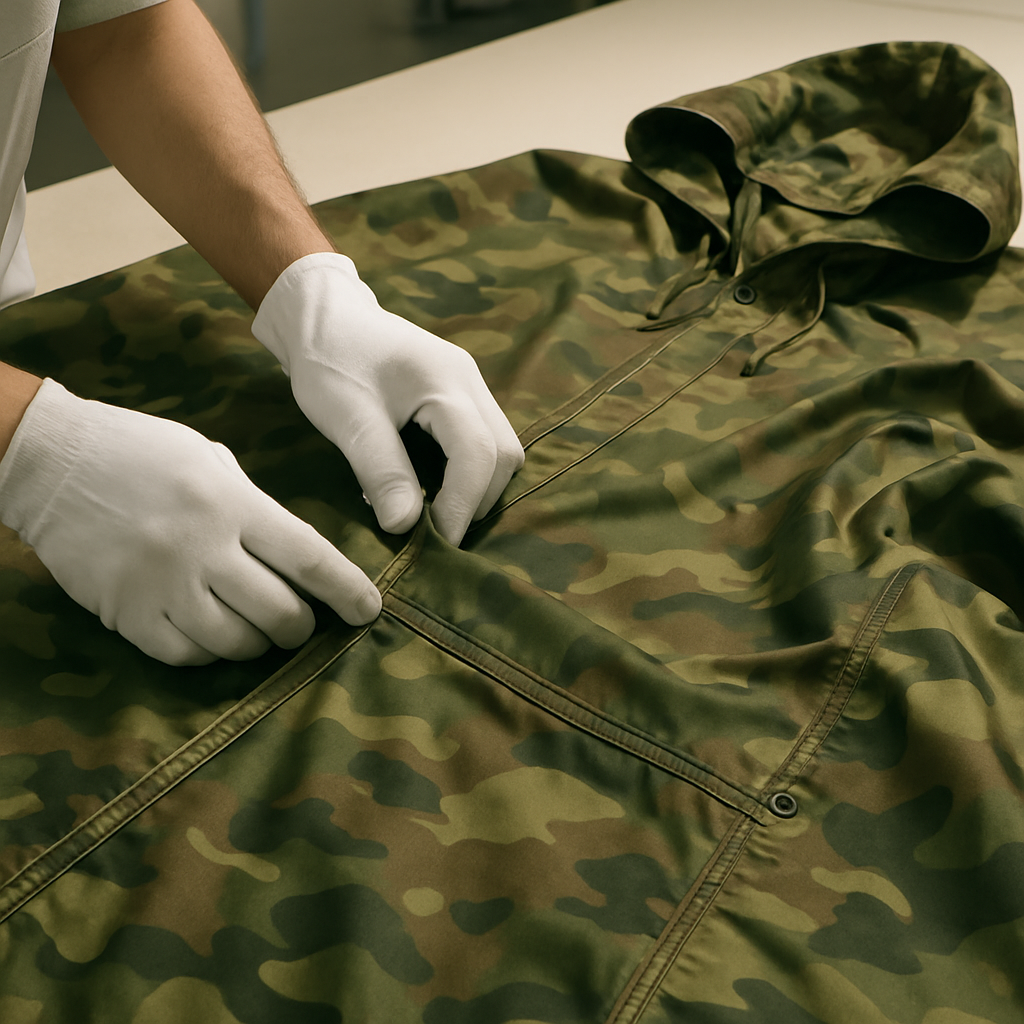
Professional Quality Inspection
Comprehensive testing procedures ensuring every raincoat meets strict quality standards.
Advanced Testing Equipment
State-of-the-art waterproof testing and quality assurance equipment for precise measurements.
Material Inspection (Fabric, zippers, tapes)
Everything starts with materials. Rainwear is a technical category, so the wrong fabric or zipper can destroy the entire batch. A professional factory performs IQC (Incoming Quality Control) before production begins.
In-Line Checks During Sewing & Seam-Sealing
A raincoat is not just sewn—it’s engineered. The stitching, sealing, bonding, and assembly require precision. In a strong OEM/ODM factory, QC inspectors walk the production lines daily to check stitching quality, seam-sealing tape, bonding & welding, and panel alignment.
Waterproof Testing Procedures
Waterproof testing is non-negotiable for real rainwear. There are two major types: Hydrostatic Pressure Test and Water Spray Test.
| Waterproof Rating | Pressure (mm) | Suitable For |
|---|---|---|
| Light Rain | 1000mm | Casual use, drizzle protection |
| Moderate Rain | 3000mm | Daily use, normal rainfall |
| Heavy/Outdoor Rain | 5000-10000mm | Outdoor activities, heavy rain |
| Technical/Professional | 15000mm+ | Extreme conditions, professional use |
What to Check During a Factory Audit (Buyer POV)
Paperwork & Worker Condition Verification
Paperwork tells you more about a factory than any sales pitch. When you visit a factory, request employee contracts, attendance records, payroll records, and age verification documents.
Red Flags to Watch For:
- 12-14 hours per day consistently listed
- Refusal to share employment evidence
- No visible worker age verification
- Incomplete payroll records
Machinery & Production Line Capability
Raincoat manufacturing is technical. You can’t make high-quality waterproof garments using basic sewing machines alone. Check for seam-sealing machines, high-frequency welding machines, cutting machines, hydrostatic pressure testing equipment, and printing & heat-transfer machines.
Material Storage & Chemical Handling
Professional raincoat factories work with materials like PU coatings, TPU membranes, PVC compounds, adhesives, solvents, and seam-tape glue. Look for proper ventilation, labeled chemical storage with MSDS sheets, fire extinguishers, and no strong chemical smells.
How to Choose the Right BSCI Supplier
Capacity & Lead Times
Understanding factory capacity helps you match suppliers to your order size and timeline requirements.
| Factory Size | Monthly Capacity |
|---|---|
| Small | 10,000-50,000 pieces |
| Medium | 50,000-200,000 pieces |
| Large | 200,000-500,000 pieces |
| Mega | 500,000+ pieces |
Common Problems in Raincoat Manufacturing (and Fixes)
Poor Seam Sealing
Problem: Seams leak water, defeating the primary purpose of rainwear.
Root Causes: Incorrect temperature settings, poor tape quality, inadequate pressure, contaminated surfaces, rushed production.
Prevention: Require hydrostatic pressure testing, verify machine calibration, request process photos, include seam sealing in QC checklist.
Color Fading
Problem: Colors fade quickly, especially in outdoor conditions.
Root Causes: Poor quality dyes, inadequate testing, UV exposure, chemical interactions.
Prevention: Request color fastness test reports, specify UV-resistant materials, include color stability requirements.
Weak Zippers or Buttons
Problem: Hardware fails during use, causing customer complaints.
Root Causes: Inferior hardware, poor attachment, inadequate testing, cost-cutting.
Prevention: Specify hardware brands, include pull-strength requirements, request supplier certificates.
Inconsistent Sizing
Problem: Garments don’t match size charts, causing fit issues.
Root Causes: Poor pattern making, inconsistent cutting, fabric variations,
Prevention: Provide detailed size charts, request size samples, include consistency requirements.
Certifications to Verify
Beyond BSCI, several certifications matter depending on your target market and product requirements.
Social Compliance
• BSCI • SMETA • WRAP • SA8000
Product Safety
• OEKO-TEX • REACH • EN343 • CE marking
Quality Management
• ISO 9001 • ISO 14001 • ISO 45001 • CPSIA
Pricing Factors for OEM/ODM Raincoat Production
Material Choice
Material costs typically represent 40-60% of total production costs.
| Material | Cost per Piece | Percentage of Total |
|---|---|---|
| PE (polyethylene) | $0.30-$0.80 | 40% |
| Basic PVC | $0.80-$1.50 | 45% |
| Standard PU coating | $1.20-$2.50 | 50% |
| EVA materials | $1.50-$3.00 | 55% |
| TPU membranes | $4.00-$8.00 | 60% |
MOQ & Order Size
Minimum Order Quantities (MOQs) and order sizes significantly impact unit costs.
Volume Pricing Tiers:
- MOQ to 10K: Standard pricing
- 10K to 50K: 5-10% discount
- 50K to 100K: 10-15% discount
- 100K+: 15-25% discount
BSCI Compliance Cost
BSCI compliance adds 3-8% to costs but provides significant value through reduced compliance risk, better quality control, improved worker productivity, enhanced brand reputation, and access to premium markets.
Materials: $1.50 (50%) | Labor: $0.80 (27%) | Overhead: $0.50 (17%) | Profit: $0.20 (6%)
Total: $3.00
Shipping & Logistics for Raincoat Orders
DDP for Europe & UK
Delivered Duty Paid (DDP) service simplifies importing for European buyers by including all duties and taxes in the quoted price, eliminating unexpected customs charges and reducing administrative burden.
Freight Options for Bulk Orders
| Shipping Method | Cost | Transit Time | Best For |
|---|---|---|---|
| FCL (20ft container) | $2,000-$4,000 | 25-35 days | 5,000-8,000 pieces |
| FCL (40ft container) | $3,000-$5,000 | 25-35 days | 10,000-16,000 pieces |
| LCL | $50-$150 per CBM | 30-40 days | Smaller orders |
| Air Freight | $4-$8 per kg | 3-7 days | Urgent orders |
Customs Documentation & Compliance
Proper documentation prevents delays and ensures smooth customs clearance. Essential documents include Commercial Invoice, Packing List, Certificate of Origin, Bill of Lading/Airway Bill, and Export License (if required).
Future Trends in Ethical Rainwear Manufacturing
Green Materials
Environmental consciousness drives material innovation including bio-based alternatives like PLA coatings, castor bean-based polyamides, corn starch-derived materials, and algae-based waterproofing.
Carbon-Neutral Factories
Climate change drives demand for carbon-neutral manufacturing through energy efficiency (solar panels, LED lighting), renewable energy (wind power, green energy certificates), and carbon offsetting (reforestation projects, renewable energy investments).
Recycled Packaging
Packaging sustainability becomes increasingly important through recycled cardboard and paper, biodegradable plastic alternatives, reusable packaging systems, and minimal packaging designs.
Digital Production Tracking
Technology enables greater transparency through blockchain integration, IoT sensors for real-time monitoring, and digital twins for virtual factory simulations and predictive maintenance.
Conclusion + Helpful FAQs
Key Takeaways:
- BSCI Certification Matters: It’s not just about ethics—it ensures better quality, more reliable production, and easier market access.
- Choose Based on Capability: Match factory capabilities to your product requirements, order volume, and timeline needs.
- Invest in Relationships: Long-term partnerships with BSCI factories provide better prices, priority service, and continuous improvement.
- Plan for Compliance: Factor BSCI compliance costs into your budgeting—they’re worth the premium for reduced risk and better quality.
- Stay Informed: Keep up with industry trends in materials, sustainability, and technology to maintain competitive advantage.
Frequently Asked Questions
Conclusion + Helpful FAQs
Key Takeaways:
- BSCI Certification Matters: It’s not just about ethics—it ensures better quality, more reliable production, and easier market access.
- Choose Based on Capability: Match factory capabilities to your product requirements, order volume, and timeline needs.
- Invest in Relationships: Long-term partnerships with BSCI factories provide better prices, priority service, and continuous improvement.
- Plan for Compliance: Factor BSCI compliance costs into your budgeting—they’re worth the premium for reduced risk and better quality.
- Stay Informed: Keep up with industry trends in materials, sustainability, and technology to maintain competitive advantage.
Ready to Source from BSCI-Certified Raincoat Factories?
Partner with ethical manufacturers who deliver superior quality and reliable service.
Expert Consultation & Factory Network
Expert Consultation
Get personalized advice for your raincoat sourcing needs
Email: poncho@ponchosupplier.com
Factory Network
Access verified BSCI-certified suppliers
Phone: +86-138-3312-4686
Quality Assurance
Professional audit and inspection services
WhatsApp: +86-138-3312-4686