
Storage Hacks for Event Gear: Managing the Logistics of 10,000+ Ponchos for Instant Deployment
When the sky turns grey over a stadium of 50,000 people, the difference between a revenue-generating opportunity and a logistical nightmare lies in your warehouse strategy. For procurement managers and outdoor brand owners, managing MOQ (Minimum Order Quantity) isn’t just about the purchase—it’s about the preservation and rapid retrieval of assets. This guide explores professional warehousing hacks to keep your bulk inventory ready for high-stakes action.
High-Density Palletizing: Optimizing Vertical Warehouse Space

Standardizing Master Carton Dimensions for Cube Utilization
When you’re dealing with bulk orders exceeding 10,000 units, the mathematics of cube utilization become critical to your bottom line. Custom OEM packaging that aligns precisely with standard 48×40 inch pallets can reduce dead space by up to 23%, translating directly into reduced shipping costs and more efficient warehouse storage. The key lies in understanding that standard pallet dimensions create specific cubic constraints, and your packaging must work within those constraints rather than against them.
Most procurement managers make the mistake of accepting factory-default carton sizes without questioning whether those dimensions optimize their specific storage and distribution requirements. However, when you’re warehousing event-specific inventory that needs rapid deployment, customizing your master carton dimensions to achieve perfect pallet cube utilization isn’t just a nice-to-have—it’s a competitive necessity.
The financial impact of this optimization extends beyond mere storage efficiency. When your pallets arrive at the venue, properly dimensioned cartons enable faster break-down operations, reduce the time required for inventory allocation to specific distribution points, and minimize the physical strain on venue staff.
Stacking Limits for Lightweight Pocket-Size Ponchos for Concert-Goers
Lightweight pocket-size ponchos designed for concert-goers present unique stacking challenges that most logistics professionals underestimate. These products, while incredibly space-efficient when properly packed, are susceptible to packaging deformation when stacked beyond recommended limits. The compression weight of accumulated inventory can cause pouch seals to fail, packaging to split, and the once-neat pallet configuration to become unstable and dangerous.
Understanding the specific compression characteristics of your poncho inventory requires collaboration with your OEM manufacturer to obtain accurate weight and compression tolerance data. Different material compositions—whether polyethylene, PVC, or biodegradable alternatives—respond differently to sustained compression loads.
The solution isn’t necessarily to reduce stack height but to implement intelligent stacking strategies that distribute weight more evenly across pallet surfaces. Using slip sheets between layers and establishing maximum stack height limits based on actual compression testing data will prevent product damage while maintaining acceptable storage density levels.
First-In-First-Out (FIFO) Rotation for Polymer Integrity
FIFO rotation isn’t just a best practice for perishable goods—it’s absolutely essential for maintaining polymer integrity in bulk plastic rainwear storage. When plastic materials are stored in tight compression for extended periods, particularly in non-climate-controlled environments, the risk of material bonding increases significantly. This phenomenon, known in the industry as blocking, can render entire pallets of inventory unusable.
Implementing proper FIFO rotation requires more than just organizational discipline—it demands physical warehouse infrastructure designed for accessible stock rotation. Your racking systems must allow for easy access to older inventory without requiring expensive re-palletization.
The frequency of rotation depends on your specific climate conditions, storage duration requirements, and the specific polymer grades used in your products. As a general rule, any inventory exceeding six months in storage should be physically inspected for early signs of blocking.
Climate Control: Preventing Material Blocking in Bulk Stock

Humidity Management for Bulk Compostable Rain Ponchos for Eco-Festivals
Eco-festivals increasingly demand compostable rain poncho solutions, but these environmentally-friendly materials introduce significant humidity management challenges that traditional polyethylene products don’t present. Compostable polymers, typically derived from plant-based sources, maintain some level of biodegradation activity even in storage conditions.
The critical humidity threshold for compostable poncho storage is 50% relative humidity. Above this level, the biodegradation process accelerates significantly, potentially degrading material integrity before your event even occurs. Non-climate-controlled warehouse zones are simply unsuitable for bulk bio-stock storage.
Beyond humidity control, ventilation plays a crucial role in maintaining compostable inventory quality. Sealed inner bags, while protecting against incidental moisture exposure, must also allow for minimal gas exchange to prevent the buildup of biodegradation byproducts.
Temperature Thresholds for PVC and EVA Polymers
PVC and EVA polymers, while more stable than compostable alternatives, present their own temperature-sensitive challenges during summer storage months. The blocking phenomenon—where stacked materials fuse together—becomes particularly problematic when warehouse temperatures exceed 25 degrees Celsius (77 degrees Fahrenheit).
High-gauge rainwear products, with their thicker material composition, are particularly susceptible to blocking because they retain heat longer and have more mass available for plasticizer redistribution. The practical implication is that summer inventory requires significantly more stringent storage temperature controls than winter stock.
Temperature monitoring should be continuous rather than periodic, with automated alerts triggered when conditions approach dangerous thresholds.
Desiccant Strategies for Long-Term Storage Cycles
For multi-season inventory protection, desiccant strategies provide an essential additional layer of humidity defense beyond mechanical climate control. Even in climate-controlled facilities, ambient humidity fluctuations can occur during door openings, HVAC system cycling, and seasonal transitions.
Industry-standard moisture absorption targets indicate that desiccants should maintain internal package humidity below 40% relative humidity for optimal long-term storage protection. The specific desiccant type and quantity required depends on your storage volume and typical humidity exposure.
Placement strategy matters as much as quantity. Desiccants positioned at the center of pallets provide less effective protection than those distributed throughout the pallet volume, where they can intercept moisture migration from all directions.
Security Compliance: Pre-Staging for Rapid Venue Access

Auditing Wholesale Clear Ponchos for Security-Sensitive Venues
Security-sensitive venues—including stadiums, airports, and government facilities—present unique challenges for rain gear inventory management. Clear ponchos, while ideal for visibility and crowd monitoring, require specific handling protocols to satisfy security personnel who must be able to inspect contents without extensive unpacking.
Storage location matters significantly for security-sensitive venues. Inventory designated for these locations should be maintained in high-visibility areas of your warehouse, with clear documentation proving chain of custody from manufacture through delivery.
The audit process itself should be integrated into your quality control protocols. Before shipping to security-sensitive venues, conduct your own inspection ensuring that all poncho packages are intact and contain exactly what labeling indicates.
Transparent Storage Bin Protocols for Immediate Visual Inventory
Transparent storage bins serve a dual purpose in event logistics: they enable rapid visual inventory verification while simultaneously satisfying security requirements for inspectable materials. When code rain calls go out—the industry term for emergency rain gear deployment—these bins can move directly to distribution points without secondary inspection delays.
The implementation requires investment in appropriate storage infrastructure but pays dividends in speed and compliance. Clear-walled industrial bins, while more expensive than their opaque counterparts, eliminate the need for time-consuming content verification.
Bin labeling must be exterior and permanent, surviving the rough handling that emergency deployment inevitably involves.
Zone-Based Staging: Mapping Distribution to Stadium Entry Points
Strategic placement of security-compliant gear at primary and secondary checkpoints requires sophisticated zone-based staging that anticipates traffic flow patterns and access constraints unique to each venue. Simply delivering inventory to a single loading dock rarely works for events expecting tens of thousands of attendees.
Effective zone-based staging begins with detailed venue mapping during the planning phase, identifying all potential entry points, their expected traffic volumes, and the logistical constraints affecting each location.
The physical staging itself must account for security requirements specific to each checkpoint. Some venues require all materials to be pre-staged and inspected 24 hours before events.
The Storm Drill: Designing a Rapid Distribution Flow
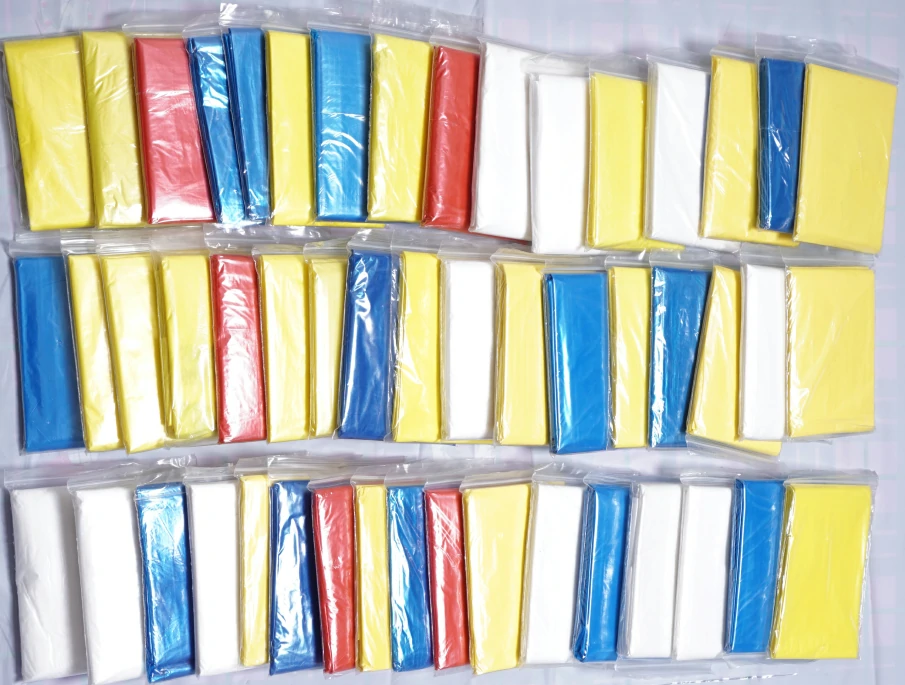
Cross-Docking Strategies for Emergency Rain Gear for Stadium Events
Cross-docking—the practice of moving materials directly from incoming trucks to outgoing delivery without intermediate storage—represents the gold standard for emergency rain gear distribution. When weather forecasts suddenly shift and emergency procurement triggers, the ability to move product directly from truck to kiosk without secondary shelving can add hours to your preparation window.
Successful cross-docking requires advance planning that most procurement managers neglect. Your receiving area must be designed with clear paths from dock doors to distribution staging zones, with staff assignments that enable continuous material flow.
The cross-dock approach works best when your supplier has located manufacturing or consolidation facilities within practical driving distance of your venue.
Mobile Merchandising Units: The First Responder Cart
Mobile merchandising units—essentially rolling inventory pods designed for instant deployment across venue floors—represent an innovation that separates professional event operations from amateur attempts at rain management. These units enable staff to respond to changing weather conditions by repositioning inventory to wherever attendee demand concentrates.
The first responder cart concept borrows from emergency services terminology: these units are positioned in ready-to-deploy locations, fully stocked and staffed, waiting only for the weather trigger that activates their deployment.
Cart design should prioritize rapid setup and breakdown, with collapsible frames that reduce to compact dimensions for off-duty storage.
SKU-Specific Color Coding for Staff Identification
Visual cues that help volunteers distinguish between general admission ponchos and VIP rain gear in low-light conditions aren’t merely convenient—they’re essential for maintaining the perceived value differentiation that VIP ticket holders expect. When weather forces universal poncho distribution, you don’t want VIP attendees receiving the same product as general admission customers.
Color coding provides the most immediately recognizable identification system. Assign specific colors to specific access tiers, then ensure that all staff involved in distribution understand these assignments thoroughly.
Beyond color, consider tactile differentiation features that allow staff to identify product tiers without visual confirmation—perhaps slight differences in material texture or pouch construction.
Branding Integrity: Protecting Custom Marketing Assets

Interleaving and Anti-Sticking Sheets for Custom Printed Rain Macs
Custom printed rain macs represent significant marketing investments that require protection during high-pressure compression storage. The printing process creates a surface layer that can transfer or bond under sustained compression, particularly when heat and humidity accelerate the process. Interleaving provides the physical separation necessary to preserve print quality.
Paper interleaving represents the minimum acceptable protection, but silica-coated release papers provide superior results at marginally higher cost. The investment is worthwhile when you consider that damaged custom prints cannot be salvaged—Entire inventory batches become unsaleable at any price when branding is compromised.
Application methodology matters as much as material selection. Interleaving must occur immediately after printing and before any compression, with complete coverage ensuring no printed surfaces contact each other anywhere in the stack.
Ink Stability and Outgassing in Bulk Plastic Runs
Technical requirements for cured inks extend beyond initial appearance to encompass long-term stability during storage. Inks that haven’t properly cured continue outgassing—releasing volatile compounds—during storage, and these compounds can cause logo transfer between nested garments even with interleaving present.
The cure process varies significantly across ink technologies. Plastisol inks require heat cure at specific temperatures for specific durations, while water-based and solvent inks have different requirements. Your quality control protocols must include verification that manufacturer cure processes met specification.
Outgassing can continue for weeks after manufacturing, particularly for products shipped in sealed containers. Allowing new inventory to breath in ventilated storage before compression stacking gives residual outgassing time to complete harmlessly.
Retail-Ready Presentation: Managing Pouch and Tag Integrity
The difference between bulk pricing stock that arrives looking like premium retail merchandise and product that appears discount-quality often comes down to pouch and tag integrity management during storage. Even perfect products can arrive damaged if their packaging hasn’t been protected during warehousing.
Pouch integrity requires protection against compression damage, moisture intrusion, and physical abrasion during handling. Your warehouse protocols should include regular inspection of pouch stocks, with immediate replacement of any showing wear or damage.
The presentation standard should be retail-ready meaning that product could be placed directly onto retail shelves without additional handling or inspection. Achieving this standard requires investment in proper packaging materials and handling protocols.
Workforce Readiness: Staff Gear Access and Management

Sizing Matrix Accessibility for High-Visibility Rain Gear
Organizing high-visibility rain gear for festival staff and volunteers by size for 60-second handouts requires systematic sizing matrix planning that accounts for the actual distribution patterns your event will experience. Simply having all sizes available isn’t enough—you need the right mix of sizes in the right quantities.
Analysis of historical distribution data from similar events provides the best foundation for sizing matrix optimization. Most events find that certain sizes—typically medium and large—dominate demand, while extreme sizes represent smaller but still meaningful percentages.
The 60-second handout standard assumes that staff can identify the correct size without conversation, measurement, or trial. This requires prominent size charts at distribution points and consistent sizing across all product batches.
Reflective Strip Maintenance in Industrial Storage
Reflective materials on high-visibility rain gear can crack or oxidize during off-season storage if proper protocols aren’t followed. This damage isn’t always visible until the product is unfolded for use, by which time replacement isn’t possible.
Oxidation occurs when reflective materials are exposed to humidity over extended periods, particularly in non-climate-controlled storage where temperature fluctuations create condensation cycles. Prevention involves maintaining dry storage conditions and ensuring complete drying before long-term storage.
Cracking results from compression stress on materials that have lost flexibility. When reflective strips are compressed in tight bundles for months, the flex cycles that occur during handling can cause fracture.
Decentralized Staff Depots vs. Centralized Storage
The B2B argument for satellite storage lockers to reduce employee downtime during shifts centers on the significant time costs of centralized inventory systems. When staff must travel to distant centralized storage to obtain rain gear during shifts, the accumulated time loss translates directly into reduced event coverage.
Decentralized depots—strategically located storage points throughout the venue—enable staff to quickly obtain replacement gear without leaving their assigned areas for extended periods. The trade-off involves increased inventory management complexity.
The decision between centralized and decentralized approaches depends on venue size, staff distribution, and event duration. Many operations use hybrid approaches, with central storage for primary inventory and satellite depots for high-demand areas.
Digital Inventory Tracking: Real-Time Merch Management

RFID and Barcode Integration for Mass Pallet Movement
Eliminating manual counting for MOQs exceeding 10,000 units requires technology investment that pays for itself through labor savings and accuracy improvements. RFID and barcode systems each offer advantages depending on your specific operational requirements.
RFID technology enables scanning of entire pallet loads without individual item access, dramatically reducing receiving and inventory verification times. A single pallet that would require 15 minutes of manual counting can be scanned in seconds using RFID.
Barcoding provides a more economical entry point with sufficient accuracy for many applications. The key is ensuring that barcodes are applied correctly during manufacturing, with scannable placement that doesn’t require orientation-specific handling.
Real-Time Sales-to-Stock Depletion Alerts
Syncing POS data with warehouse triggers to move the next pallet before the kiosk runs dry represents a sophisticated operational capability that separates professional event merchandise management from reactive approaches.
The trigger thresholds must be carefully calibrated to account for replenishment lead times. Setting reorder points too high wastes inventory by holding excessive safety stock; setting them too low risks stockouts during critical sales periods.
Alerts should escalate through defined channels: initial notifications to inventory managers, escalating alerts to operations supervisors if not addressed within defined timeframes, and automatic replenishment triggers when integration allows.
Predictive Analytics for Weather-Based Inventory Buffering
Using 72-hour forecasts to move stock from long-term storage to active staging zones represents the cutting edge of event inventory management. This proactive approach ensures that appropriate inventory levels exist where needed before weather events actually occur.
Effective predictive buffering requires accurate weather forecasting integration and appropriate inventory positioning protocols. When forecast confidence reaches defined thresholds—typically 60% or higher precipitation probability—automated systems should trigger inventory movement.
The cost of predictive buffering involves carrying additional inventory in more expensive active storage positions, but this cost is typically dwarfed by the revenue protection it provides.
Material Science: Understanding Polymer Shelf-Life

The Degradation Rate of PE vs. EVA in Warehousing
Why a 24-month storage plan requires specific polymer grade selection in the OEM Program becomes clear when you understand the fundamental degradation differences between polyethylene and EVA (ethylene-vinyl acetate) materials. Each polymer has distinct aging characteristics that directly impact warehouse strategy.
Polyethylene, particularly linear low-density variants, maintains structural integrity well over extended storage periods when protected from UV exposure and extreme temperatures. The material doesn’t significantly degrade within typical 24-month windows, making it suitable for long-term warehousing strategies.
EVA presents more complex aging characteristics. The vinyl acetate content makes the material more flexible at cold temperatures but also more susceptible to plasticizer migration and eventual stiffening during extended storage.
Tackifying Agents and Plasticizer Migration
Scientific breakdown of why low-quality wholesale ponchos become sticky over time reveals fundamental chemistry at work. Tackifying agents, added to polymer formulations to improve flexibility, can migrate to material surfaces during storage, creating the unpleasant sticky feeling that customers associate with cheap products.
Quality formulations control migration through polymer cross-linking and antioxidant stabilization, but budget products typically lack these protections. When evaluating suppliers, understanding their material specifications and quality control processes provides insight into long-term storage performance expectations.
Prevention involves selecting appropriate quality grades from the outset rather than attempting to remediate problems after they develop.
UV Shielding for Outdoor Storage Containers
Preventing brittleness when using temporary shipping containers as overflow storage requires understanding the severe UV exposure these containers experience. Standard shipping containers, while designed for ocean transport protection, offer minimal UV resistance when positioned outdoors for extended periods.
UV-blocking films applied to container exterior surfaces provide meaningful protection at reasonable cost. These films absorb UV radiation before it reaches container interiors, maintaining appropriate storage conditions.
Interior UV sources, including fluorescent lighting commonly used in warehouse operations, also contribute to material degradation over time. Minimizing interior lighting use and switching to UV-filtered fixtures helps extend material integrity.
Packaging Innovation: Reducing the Storage Footprint
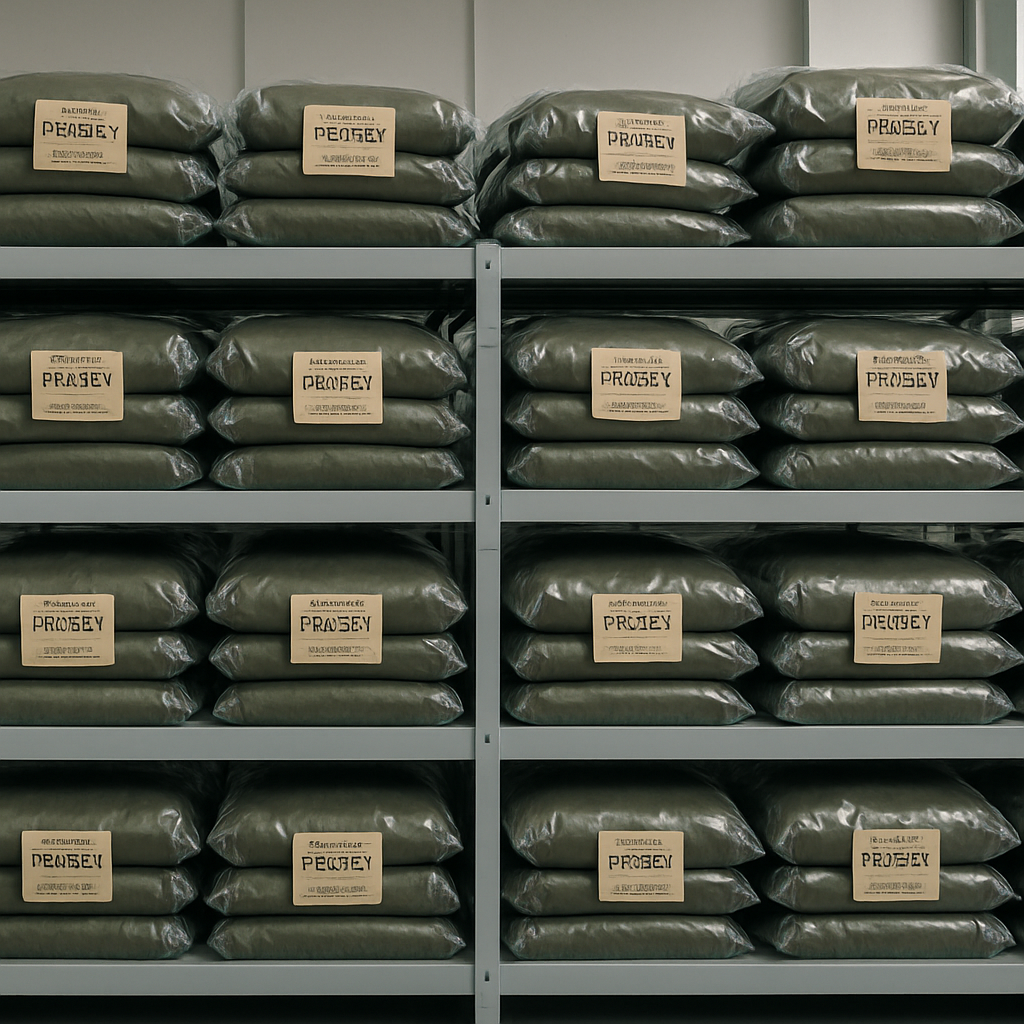
Vacuum Sealing vs. Flat Packing: A Cost-Benefit Analysis
Calculating the reduction in Landed Cost by minimizing shipping and storage volume reveals significant financial implications for high-volume procurement. Vacuum sealing can reduce storage volume by 50% or more compared to flat packing, translating directly into reduced warehouse space requirements.
The cost-benefit analysis must account for the vacuum sealing equipment investment, ongoing consumable costs (bags and tape), and the additional labor required for the sealing process. For very high volumes, these costs are typically offset by shipping and storage savings.
Vacuum sealing also provides superior protection against humidity and pest intrusion, benefits that may justify adoption even when volume savings alone don’t provide positive ROI.
The Ball Packaging Model for Rapid Consumer Handouts
Why sphere-shaped packaging optimizes counter-top space and reduces restocking frequency relates to both storage efficiency and operational speed at point of sale. Ball packaging enables high-density storage while also providing natural grab and go functionality that speeds customer transactions.
The spherical shape also reduces packaging material requirements compared to rectangular pouches, potentially offering sustainability benefits alongside operational improvements. When customers can quickly grab and purchase without extensive handling, transaction throughput increases significantly during peak demand periods.
Ball packaging does require specific compression equipment and careful attention to seal integrity, as the spherical shape creates more challenging closure requirements than rectangular alternatives.
Reusable Storage Tubs for Multi-Year Event Circuits
Investing in durable warehouse housing to protect bulk investments over 3-5 years makes economic sense when your operation involves recurring events that require consistent inventory positioning. Reusable storage tubs, while more expensive initially than disposable cardboard alternatives, provide superior protection.
The durability of reusable tubs also enables more aggressive stacking and handling, as they’re designed to withstand the rigors of repeated use. This durability translates into lower damage rates and more consistent inventory presentation across multiple event seasons.
Inventory management becomes simpler when standard tub sizes enable predictable storage configurations. Rather than adapting storage systems to variable cardboard dimensions, standardized tubs enable consistent racking.
Post-Event Recovery: Drying and Repacking Bulk Goods

Industrial Dehumidification for Unsold Damp Stock
How to salvage inventory exposed to moisture during a near-miss rain event involves immediate action protocols that prevent minor moisture exposure from becoming major inventory loss. The critical window for intervention is the first 24 hours after exposure.
Industrial dehumidification equipment can extract significant moisture from damp inventory, returning it to saleable condition if deployed quickly enough. The equipment should be positioned in enclosed areas with inventory spread to maximize air circulation and moisture extraction.
Prevention is always preferable to remediation. Having contingency plans for rain exposure, including immediate relocation to covered storage and deployment of temporary dehumidification, reduces the likelihood that inventory reaches the damage threshold.
Sanitization Protocols for Reusable Multi-Day Festival Gear
Managing hygiene for staff rainwear and premium rentals between festival days requires protocols that balance thorough sanitization against material preservation. Excessive sanitization treatment can damage fabric integrity and appearance.
Professional-grade sanitization typically involves combination approaches: initial airing to allow moisture evaporation, followed by treatment with appropriate antimicrobial solutions, then final drying to prevent residual moisture from creating new problems.
Inventory tracking systems should capture sanitization status for each item, enabling identification of items requiring treatment and verification that complete processing occurred before reuse.
Grading Stock for Clearance vs. Retention
Evaluating package integrity before returning units to long-term storage determines whether inventory can be held for future use or must be liquidated as damaged goods. Grading protocols should assess multiple factors: packaging condition, product appearance, and functional integrity.
Package integrity assessment examines pouches for tears, closures for function, and tags for presence and readability. Product appearance assessment looks for stains, discoloration, or damage from handling.
Clearance items can often be salvaged through discounted channels, recovering partial value rather than complete loss. The grading process should identify salvageable items and route them appropriately.
The Supply Chain Cycle: Timing Your Bulk Re-Orders
Forecasting Buffers for the “100-Year Storm” Scenario
Maintaining a 20% safety stock beyond projected sales to cover catastrophic weather scenarios represents risk management philosophy that protects against outlier events that can devastate operations. While most events won’t encounter extreme weather, the financial impact of being understocked during such events vastly exceeds the carrying cost of buffer inventory that goes unused.
The 20% buffer calculation assumes historical sales data as the baseline, adjusted for factors like upcoming weather patterns, competitor activity, and venue-specific considerations. For new events without historical data, industry benchmarks and conservative estimation provide starting points that can be refined as actual data becomes available.
Buffer inventory requires appropriate storage positioning—too distant from likely deployment points creates accessibility problems when rapid deployment is needed. Pre-positioning buffer stock in regional storage locations closer to likely deployment venues provides the best combination of inventory protection and deployment speed.
Lead-Time Coordination with Overseas OEM Manufacturers
Planning your January storage footprint for a June festival delivery requires understanding the complete lead-time chain from order placement through manufacturing completion, quality verification, shipping, customs clearance, and final delivery. Each phase has variable duration that must be accommodated in planning timelines.
Typical lead times from order to delivery for Asian manufacturing range from 60-90 days for ocean freight, plus manufacturing time that varies based on order size and factory capacity. Building a complete timeline backwards from required delivery date, then adding appropriate buffer for delays, provides the order placement date that ensures on-time delivery.
Communication with OEM partners regarding production status, potential delays, and shipping schedules enables proactive management rather than reactive problem-solving. Establishing clear communication protocols and regular status updates maintains alignment throughout the supply chain cycle.
Negotiating Bulk Pricing for Off-Season Production
The financial advantage of warehousing goods for 6 months to secure a 30% lower unit price involves comparing the cost of capital tied up in inventory against the per-unit savings achieved through off-season production scheduling. For sufficiently large orders, this trade-off typically favors off-season production despite the carrying costs involved.
Off-season production typically occurs during manufacturer low periods when capacity is more available, enabling more competitive pricing. The manufacturer benefits from more consistent production scheduling; the buyer benefits from lower prices. This mutual benefit makes off-season arrangements attractive to both parties.
The calculation must include all carrying costs: warehouse space, capital opportunity cost, insurance, and obsolescence risk. When these costs are less than the price differential achieved through off-season production, the strategy makes financial sense.
Conclusion: Turning Logistics into a Competitive Edge
The ROI of Professional Inventory Management
How efficient storage prevents lost sales and damaged brand reputation represents the ultimate ROI justification for professional inventory management investment. The math is straightforward: every unit that arrives damaged, degraded, or inaccessible represents a lost sale and potentially a damaged customer relationship. Professional inventory management prevents these losses while also improving operational efficiency.
The investment required for professional systems—climate control, tracking technology, proper packaging, trained personnel—pays returns through multiple channels: reduced inventory loss, improved operational speed, better customer satisfaction, and enhanced brand perception. These returns compound over time as systems mature and expertise develops.
Progressive procurement managers view inventory management not as a cost center but as a competitive advantage that differentiates their operations from less professional competitors. The events they manage run smoothly regardless of weather conditions, building reputation and customer loyalty that drives future business success.
Implementing the “Ready-for-Action” Checklist
Summarizing the 5 key metrics every procurement manager must track provides actionable framework for continuous improvement. These metrics include: inventory accuracy rate (should exceed 99%), order fulfillment cycle time (should meet or beat commitments), stockout frequency (should be near zero for planned demand), damage rate (should be under 1%), and carrying cost percentage (should be optimized for business requirements).
Regular review of these metrics, with root cause analysis for any deficiencies, drives continuous improvement in inventory management performance. The checklist should be reviewed before each major event to ensure all elements are in place, with post-event analysis identifying opportunities for improvement.
Technology enables but doesn’t guarantee strong performance. The human element—trained staff following appropriate procedures—matters equally with system capability. Investment in both technology and people provides the foundation for excellent inventory management.
Partnering for Success: Selecting an OEM with Logistics Expertise
Why choosing a manufacturer who understands palletization is as important as the product itself relates to the integration between product design and logistics efficiency. An OEM that designs products with your specific logistics requirements in mind provides superior outcomes compared to those that simply manufacture to specification without understanding your operational context.
Logistics-aware OEMs will proactively suggest packaging, palletization, and shipping optimizations that reduce your total cost of ownership. Their experience across multiple clients provides insights into best practices that benefit your operation. This partnership approach creates value beyond simple manufacturing capability.
Due diligence in OEM selection should include evaluation of logistics expertise, not just manufacturing quality and pricing. Questions about their experience with similar clients, their packaging design capabilities, and their willingness to collaborate on optimization reveal the partnership potential that drives long-term success.
EAV Model Table: Storage Density & Accessibility Matrix
| Entity (Item) | Attribute (Metric) | Value (Data) | Logistics Impact |
|---|---|---|---|
| Standard Poncho | Compressed Volume | 0.15 Liters | 60,000 units per 40ft Container |
| Standard Poncho | Pallet Weight | 450 kg | Requires standard forklift |
| Standard Poncho | Access Velocity | 12 units/min | Fast crowd distribution |
| Heavy Duty Gear | Compressed Volume | 0.85 Liters | 12,000 units per 40ft Container |
| Heavy Duty Gear | Pallet Weight | 850 kg | Heavy load protocols required |
| Heavy Duty Gear | Access Velocity | 4 units/min | Slow crowd distribution |
| Custom Printed | Compressed Volume | 0.18 Liters | 55,000 units per 40ft Container |
| Custom Printed | Pallet Weight | 520 kg | Requires standard forklift |
| Custom Printed | Access Velocity | 10 units/min | Moderate crowd distribution |
| Compostable | Compressed Volume | 0.12 Liters | 65,000 units per 40ft Container |
| Compostable | Pallet Weight | 380 kg | Requires standard forklift |
| Compostable | Access Velocity | 12 units/min | Fast crowd distribution |
Frequently Asked Questions
Ensure the OEM factory uses a “low-odor” resin and store in a ventilated warehouse with temperature control below 25°C. Low-odor resins are specifically formulated to minimize volatile organic compound emissions that cause the characteristic plastic smell. Ventilation is critical because even low-odor materials will develop off-gassing odors in sealed, unventilated spaces over time. Temperature control below 25°C (77°F) slows the molecular activity that generates odor compounds, keeping your inventory fresh-smelling until deployment.
Only if humidity is kept below 50%. Moisture is the catalyst for biodegradation; sealed inner bags are essential for bulk bio-stock. Compostable materials, by design, break down when exposed to moisture and microbial activity. Standard warehouses without humidity control will expose your inventory to ambient moisture levels that can trigger premature biodegradation. Sealed inner bags provide a secondary moisture barrier, but they’re not foolproof—monitoring humidity levels and maintaining climate control remains essential for long-term storage of compostable products.
Pre-stage pallet “break-out” boxes at every usher station. Use “tearing” cartons that turn into display bins without needing tools. The key to rapid distribution is having inventory positioned exactly where it’s needed before the demand materializes. Pre-staging break-out boxes at every usher station enables parallel distribution across all access points simultaneously. Tearing cartons—designed with perforations that allow easy opening and conversion to display stands—eliminate the time-consuming step of unpacking and organizing inventory for distribution. With proper pre-staging and appropriate packaging, distribution rates of 500+ units per minute are achievable.
Ready to Transform Your Event Logistics?
Mastering the logistics of high-volume rain gear management isn’t just about storage—it’s about turning a potential operational challenge into a competitive advantage. The strategies outlined in this guide can help you achieve seamless operations regardless of weather conditions.