
Bulk rainwear by industry · Practical choices for niche markets
Bulk Rainwear by Industry: A B2B Guide to Niche Markets
The right rainwear order starts with what people will actually do in it. A theme park kiosk, a fashion collection and a relief distribution point need different answers, even when each brief begins with a rain poncho. Use this guide to connect the wearer, the distribution setting and the purchasing decision before you approve a bulk order.
Choose the market. Understand the wearer. Build a workable bulk order.
01 / 12
Define the industry brief before comparing bulk rainwear
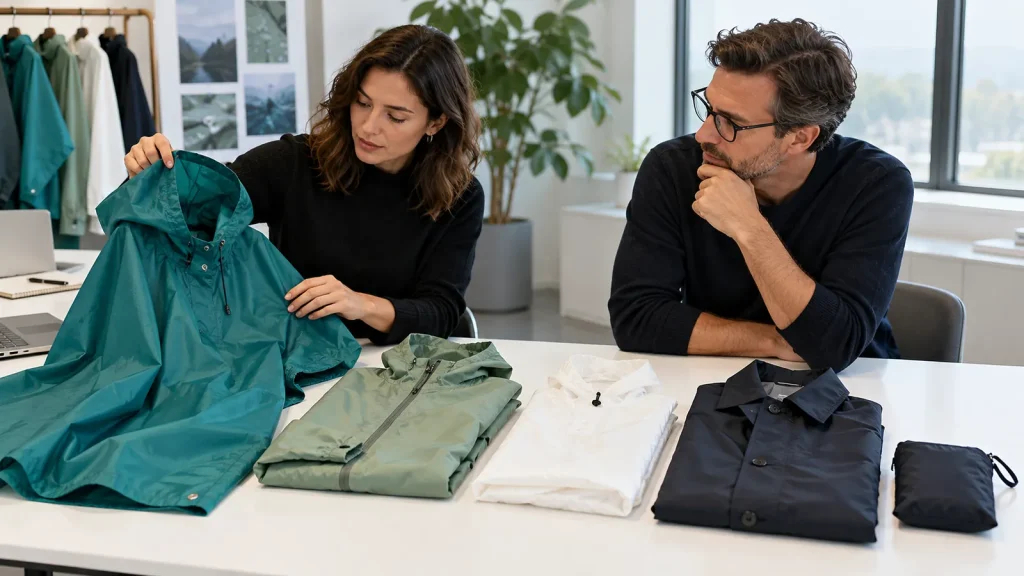
Map the wearer journey from issue to storage
A useful rainwear brief begins a few minutes before someone puts the garment on. Where do they get it? Are they standing at a busy admission gate, collecting a work travel kit, choosing a garment for a collection or receiving supplies through a community distribution team? Those situations create different expectations about size, opening instructions, appearance and assistance. Start by describing that first encounter in ordinary language. A product photograph can show a silhouette, but it cannot tell your supplier how the garment will move from a carton into someone's hands.
Follow the journey through actual use. Write down the expected activity, clothing underneath, items carried and likely changes in location. A visitor may alternate between outdoor paths and indoor exhibits. A commuter may need to remove a damp jacket before boarding a train. A wedding guest may want protection over formal clothing without losing access to a bag. These are practical design inputs. They can influence opening size, closure access, coverage and the way a pouch is attached or supplied. Avoid turning them into assumptions that every wearer will behave identically.
Next describe what happens when the rain stops. A compact pouch is useful only if the user can reasonably put the garment back into it. A reusable construction needs instructions that match its material and intended care. An event contingency item may need a clearly planned collection or disposal route. Ask who takes responsibility for those steps. The buyer, venue, distributor and wearer may each control a different part of the experience, so the order should not depend on an unassigned action happening automatically at the end of the day.
Use a simple journey worksheet with five entries: receive, open, wear, remove and store or route onward. Under each entry, record the task, the person responsible and the feature that helps. For example, an attraction team might request an identifiable outer pack so staff can distinguish adult and youth stock without opening individual units. A commuter collection might prioritize a pouch opening that accommodates ordinary hand folding. These are hypothetical choices to investigate, not universal prescriptions. They become valuable when your team tests them with the proposed sample.
Include the moments when the ideal journey breaks down. Someone may open the wrong size, drop the pouch, wear a backpack or need help with a fastening. A stock room may have limited shelf space, and a temporary event team may have only a short briefing. You do not need to design for every imaginable event. Choose the recurring situations that matter to your program and ask whether the sample, package and instructions handle them sensibly. This keeps the brief focused without overlooking common points of friction.
Finally, turn the journey into purchasing questions. Ask the supplier to identify the proposed construction, packed dimensions, size options, opening method and care information. Request a sample in its intended pack, not only a loose garment. Give the receiving or distribution team a chance to review it alongside the commercial buyer. When those people can explain how they will issue, use and manage the product, your bulk rainwear specification has a practical foundation. You can then compare materials and branding against a shared picture of the job.
Separate shared specifications from market-specific requirements
Buying for several industries does not require a completely separate development process for every customer. Some requirements may be shared: consistent measurements, secure seams, agreed artwork placement and legible carton identification. Other requirements belong to a particular market. A fashion brand's presentation standard, an aid program's allocation system and a venue's rapid issue procedure should not be collapsed into one vague request for premium rainwear. Build a common specification framework, then add the requirements that make each program different. That structure helps buyers compare proposals without pretending the end uses are interchangeable.
Start the common framework with product identity. Give each proposed model a reference, construction description, size range and revision date. State which parts may vary, such as colour, print or pouch, and which parts must remain fixed. If two orders use the same base garment but different decoration, keep that relationship visible. It may help organize sampling and quotations, but it does not automatically mean the decorated versions have identical performance or documentation needs. Ask the relevant reviewers to assess changes to the actual configuration being purchased.
Create a second column for the market requirements. Tourism may emphasize compact display, easy identification and repeat replenishment. Fashion may emphasize drape, fit consistency and finish. Relief purchasing may emphasize assessed needs, distribution practicality and traceability. Outdoor celebrations may emphasize discreet presentation and simple issuing. Commuter programs may emphasize carrying, removal and repeat use. These are starting points for discussion. A particular customer can reverse the priorities, and the final brief should reflect that customer's actual operating conditions rather than a stereotype about its industry.
Use a priority scale that distinguishes mandatory requirements from preferences. A mandatory requirement needs a clear acceptance decision; a preference can be compared against cost, timing or another benefit. For example, a specified size envelope might be mandatory while a custom pouch colour remains optional. Make the distinction before quotations arrive. Otherwise, a supplier may remove a feature that one department considers essential, or spend development effort on an option that nobody would protect when the budget is reviewed. Clear priorities make alternatives easier to evaluate fairly.
Record the evidence needed beside each requirement. A dimension calls for a measurement method and sample result. A print appearance requirement calls for an approved decorated reference. A regulatory question calls for a responsible specialist and appropriate product-specific documentation. A distribution requirement may call for a handling trial with the venue team. These different forms of evidence should remain distinct. A good-looking sample does not answer a chemical compliance question, and a laboratory report does not show whether staff can find the right size quickly in a crowded stock cupboard.
Before releasing the enquiry, ask someone outside the development conversation to read the brief. Can they tell which market the order serves, what is fixed and what remains open? Can they identify the latest version without reconstructing an email chain? A short review often exposes missing definitions while they are still easy to correct. Keep the common framework for future orders, but update the market-specific portion each time. Reusing a useful process saves effort; reusing an old assumption without checking the new customer can create avoidable problems.
Compare proposals against a complete operating model
A quotation becomes meaningful when it describes the same job as your buying brief. Before comparing offers, check the product construction, quantity breakdown, decoration, packaging and delivery scope. If one proposal includes individually packed sizes and another assumes mixed loose stock, the totals are not describing the same service. Put the differences into a comparison sheet before deciding which offer deserves further development. This is especially useful for niche rainwear programs, where handling and presentation can matter as much as the basic garment specification.
Build the comparison around the complete order rather than a visible unit figure. Include sampling, artwork preparation, special materials, packing requirements, inspection arrangements and the agreed delivery basis. Ask suppliers to identify exclusions and assumptions in writing. You can discuss Bulk Pricing through quantity bands without publishing retail prices or treating the cheapest headline as the automatic winner. The commercial goal is to understand what your business receives, what it must provide and which unresolved decisions could change the proposal later in the process.
Consider the work your own team must perform. A compact holder may look attractive but require extra opening steps at a distribution desk. A mixed carton may reduce one packing operation while increasing sorting at the destination. A highly specific colour assortment may suit a collection but leave small balances that are difficult to replenish. Estimate these effects using your own operation and label assumptions clearly. Do not turn a planning estimate into a universal saving claim. The purpose is to compare options with enough context to choose responsibly.
Use hypothetical scenarios to test the comparison. Imagine a tourism buyer ordering for three locations, each with a different storage space and guest profile. Proposal A might use one base garment with location-specific outer labels; proposal B might introduce separate garment colours and packs. Neither approach is automatically better. The buyer should compare identification, replenishment, minimum quantities and the consequences of transferring stock between sites. Writing the scenario down makes the tradeoff visible to people who are not involved in the daily issuing process.
Give timing its own review. Ask when the specification must be fixed, when samples can be assessed and what starts the production lead time. Separate an estimated dispatch date from the date usable stock is needed at the final location. If a proposal depends on artwork, payment or material confirmation, show that dependency beside the milestone. A supplier's optimistic schedule cannot compensate for an internal approval that has no owner. The operating model should include both sides of the order, not only the factory's planned activities.
Close the comparison with an acceptance plan. State who will approve the sample, review the evidence, accept deviations and receive the goods. List unresolved points instead of hiding them inside an overall score. A strong proposal is one your team can understand, evaluate and manage through delivery. Once that proposal is selected, carry its agreed scope into the purchase documentation and revision register. This gives the OEM Program a stable starting point and helps prevent later discussions from drifting back to assumptions that were never actually approved.
Build the technical brief with our Rainwear Product & Material Guide for Wholesale Buyers, then connect it to the order process in our Wholesale Rainwear Buyer’s Guide to Sourcing, Branding and Logistics.
02 / 12
Choose rain ponchos for theme parks, zoos and tourism
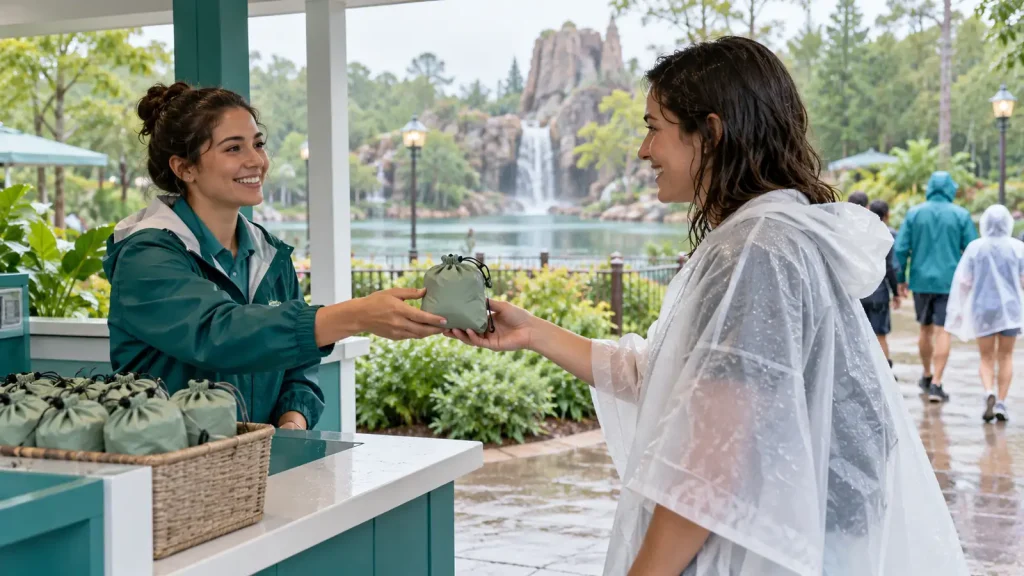
Build the distribution plan around guest movement
Attractions often need rainwear at the moment guests have the least patience for a complicated transaction. People may be looking for cover, keeping a group together or carrying food and bags. The purchasing brief should therefore describe the distribution point as carefully as the garment. Is the poncho issued at admission, included in a group package, stocked in a gift shop or held for operational contingencies? Each route changes the pack, stock identification and staff instructions. Map the actual route before approving a format that looks appealing on a sample table.
Walk through the guest flow with the operations team. Identify where rainwear can be offered without blocking an entrance, queue or emergency route. Note which locations have covered storage and which rely on stock brought from a central room. The aim is not to redesign the attraction's safety procedures through a product order. It is to make sure the rainwear supply fits the procedures the venue already owns. If the proposed issuing point creates extra sorting or unpacking, include that work in the review rather than assuming staff will absorb it.
Define how staff distinguish stock. Adult and youth sizes, different locations or separate guest programs may need clear outer identification. A visible colour cue can help, but it should not be the only identifier if similar colours or poor lighting could cause confusion. Ask for a practical carton and inner-pack label proposal. Keep the information relevant to the people using it: model, size, quantity and destination allocation may be more useful than decorative packing language. Confirm that the label matches the current order and sample reference.
Review the first opening with someone who has not seen the product before. Can they find the opening, remove the garment and understand how it is worn? Does the pack create loose pieces that the venue must manage? If the item includes a separate pouch, decide how staff explain its purpose and whether it remains attached during issue. A short handling exercise can reveal obstacles that a photograph misses. Record observations in plain language, then ask the supplier whether a reasonable change can address them without creating a new problem.
Include the end of the visit. A guest may carry a damp poncho into a restaurant, shop or transport area. A reusable option needs a suitable carrying and care message, while any collection system needs a real owner and a feasible downstream route. Do not promise that every item will be reused or recycled because a collection bin appears in a plan. Ask the operations team what it can actually support. The rainwear package should communicate the agreed process accurately and avoid creating expectations the venue cannot meet.
Finally, connect distribution quantities to location-level stock records. Set a practical method for recording stock issued, stock remaining and transfers between points. The method can be simple, but it should distinguish a quiet location from an empty shelf. Those observations help the next purchase reflect real demand and handling experience. A tourism rainwear program becomes easier to manage when the buyer, store team and guest-facing staff use the same model and pack references. That shared language is often more useful than adding another decorative feature to the garment.
Match souvenir expectations with practical garment features
A souvenir rainwear brief combines two jobs: useful rain protection during the visit and a product the guest may choose to keep. Neither job should disappear behind a large logo. Ask the brand and operations teams what the item is expected to represent. A compact contingency poncho, a reusable attraction jacket and a gift-shop collection piece can all carry a destination identity, but they create different expectations about construction, fit and presentation. Define the intended offer before choosing a material or requesting artwork mockups.
Start with the silhouette and coverage. Consider the likely clothing underneath, the intended size range and whether the product is used while walking, standing in a queue or moving between indoor and outdoor spaces. Check the hood, arm openings and closure arrangement on actual samples. A broad shape may simplify allocation, but it still has limits. Record the dimensions and intended size envelope rather than relying on one-size language. If youth products are included, treat their design and compliance review as a separate part of the program.
Then consider the visual identity. A restrained mark, repeat pattern or distinctive colour can support the attraction's design direction without overwhelming the garment. Review the artwork on the actual material and in the intended print position. A flat digital proof cannot show how folds, seams or transparency affect the result. Ask for the decorated sample stage that fits your approval needs. Make sure the brand owner understands what it is approving: colour appearance, scale and placement are separate decisions, and all should be linked to a specific revision.
If keeping the garment is part of the concept, review the practical reasons someone would keep it. Can it be dried and stored according to the supplier's instructions? Is the pouch easy to use? Does the construction support the proposed repeat-use positioning? These questions should be answered for the exact product rather than inferred from its material name. Avoid promising a fixed number of uses without a defined basis. A careful product description can explain features and care without turning an aspiration about souvenirs into an unsupported durability claim.
Examine how the item looks after packing. Fold lines, compressed hoods and print placement can affect the first impression when the package is opened. Ask for a packed sample that has followed the proposed folding method, then inspect it after ordinary handling. If the gift shop will display the pack rather than the garment, review that view as well. The buyer should know whether the package clearly communicates the size and product type without requiring staff to open stock for every enquiry. Useful presentation supports both guests and the team serving them.
Keep commercial options manageable. A destination may want several colours or seasonal designs, but each variation can affect MOQ, artwork approvals and replenishment. Ask which elements can change within an agreed base model and which create a separate production requirement. Compare a focused assortment with a broader one using expected allocation and storage capacity. The strongest souvenir rainwear proposal is one the attraction can present consistently, replenish sensibly and describe honestly. Its visual appeal should support those practical responsibilities throughout the program, not only during the initial launch.
Test replenishment and handling before the busy period
Rainwear stock can look sufficient in a central warehouse while the location that needs it has none available. Before placing a bulk order, map how cartons move from receiving to each attraction outlet. Include the people who handle replenishment, the access times they work within and any limits on carts, shelving or storage rooms. These details help determine useful inner-pack quantities and carton dimensions. A packaging decision made without the destination team can create unnecessary work every time stock is moved during a busy day.
Ask for the packed dimensions and gross weight of the proposed master carton, together with the number of units and inner packs. Verify the information against a representative packed sample when that is part of the agreed development process. Do not assume that two garment options with similar folded dimensions will have identical carton requirements. Pouches, closures and packing orientation can change the result. The logistics comparison should use the proposed complete pack, and any later changes should be reflected in the packing list and receiving plan.
Run a small internal handling trial before fixing the final arrangement. The team can practise identifying a carton, opening an inner pack and placing stock at the issuing point. Record where they have to stop and ask a question. Perhaps the size label is hidden after the carton is shelved, or the inner pack contains more units than fit the local cupboard. Those observations are useful because they connect the specification to ordinary work. Ask for changes that solve the observed problem, then check the revised sample rather than assuming the adjustment is complete.
Set replenishment triggers using the venue's own records and operating judgment. A fixed threshold may work for a stable outlet, while a large event day may need a planned allocation and a reserve under a named person's control. Keep those two situations distinct. Avoid describing a speculative demand figure as a forecast with guaranteed accuracy. Record the assumptions behind the plan, such as expected attendance, issue policy and opening hours, and review them after use. The aim is to make shortages and surplus understandable enough to improve the next decision.
Plan how exceptions are handled. A carton may arrive with a different label, a location may request an unplanned transfer or staff may find a pack that does not match the approved reference. Give the team a contact and a simple method for holding questionable stock without mixing it into normal supply. Photograph or record the identifying details where appropriate. The receiving process should support a clear decision rather than force staff to improvise because the procurement contact is unavailable during the attraction's operating hours.
After the busy period, review more than the quantity sold or issued. Ask which sizes were requested, whether packs were easy to identify and whether the proposed storage arrangement worked. Separate product concerns from distribution concerns so the supplier receives actionable feedback. A repeated opening difficulty may call for a packaging change; an empty shelf at one outlet may call for a different replenishment route. Use the findings to update the next brief and its version number. This makes the tourism program more consistent without requiring a complete redesign after every season.
Compare the use and handling assumptions in our disposable versus reusable rain poncho guide before choosing a tourism stock program.
Turn the tourism brief into a practical sourcing and distribution plan with our Bulk Rain Ponchos for Theme Parks, Zoos and Tourist Attractions guide. Compare guest fit, branded packaging, kiosk replenishment and sample approval before requesting a bulk proposal.
03 / 12
Develop fashion rainwear around a coherent collection

Translate the brand direction into a wearable silhouette
Fashion rainwear development starts with the collection role. Is the garment intended as a compact outer layer, a longer coat, a coordinated capsule piece or a practical accessory to an existing range? A mood board can express the desired character, but the supplier also needs a technical explanation of how that character should appear on a body. Describe length, volume, shoulder shape, sleeve treatment and closure position. Connect each choice to the wearer and the collection rather than asking for a premium look that different reviewers may interpret differently.
Use reference images to communicate a direction without treating another brand's finished design as a specification to copy. Identify the features that matter: a clean front, a relaxed shape, restrained hardware or a particular relationship between hood and collar. Then develop your own approved design details. A useful discussion separates visual inspiration from production instructions. It also gives the technical team room to explain where the proposed material or assembly method may change the drape, bulk or finish compared with the initial design concept.
Review the silhouette with the intended layers underneath. A coat that looks balanced over a light shirt may behave differently over a jacket or knitwear. Ask the fit reviewer to assess movement and proportions in the relevant combinations. Record the base size, body measurements used for the review and garment measurement points. Do not let a single model's appearance become the entire size specification. The collection needs an agreed sizing approach that can be checked across the proposed range and communicated consistently to everyone approving the product.
Discuss construction choices early. Seams, pockets, facings, closures and hood adjustments can affect appearance and use. A design detail may look simple in a sketch while creating a difficult junction in the proposed material. Ask for a technical review before treating the sketch as final. When a supplier proposes an alternative, compare the effect on the design, performance brief, cost and timing. Keep the decision visible in the revision record. This avoids approving the visual concept in one meeting and discovering a different construction in the next sample.
Use colour as part of the garment rather than a separate swatch decision. Review how the colour appears on the actual substrate, alongside the proposed hardware and under agreed lighting conditions. If the collection includes several materials, do not assume the same colour reference produces an identical visual result on all of them. Record acceptable appearance and any approved variation. The purpose is not to demand an impossible abstraction of perfect sameness; it is to establish a reference that the supplier and brand team can use when evaluating production.
Finish the design brief with a short explanation of what must remain recognizable throughout development. Perhaps the relaxed shoulder, quiet front and packable format are essential, while a pocket shape remains open. Giving those priorities to the technical team makes the conversation more productive. They can propose workable changes without accidentally removing the collection's defining features. An OEM Program succeeds when the design direction and the production specification become compatible, reviewable documents. Both should describe the same garment before the buyer commits to the bulk assortment and launch plan.
Review finish and fit on the proposed production construction
A fashion raincoat sample should be reviewed as a garment, not only as a photograph. Examine it on a hanger, laid flat and worn by an appropriate fit reviewer. Each view reveals something different about symmetry, proportions, seams and movement. Use a checklist that names the areas to inspect rather than relying on a general impression of quality. A structured review does not remove aesthetic judgment. It makes that judgment easier to explain and gives the supplier a specific issue to resolve when the sample needs another round of development.
Confirm what the sample represents before evaluating it. Ask whether the material, colour, closures, decoration and assembly method match the proposed production configuration. If any element is provisional, record it clearly. A fit sample may be useful for proportions without being a valid reference for final surface appearance. A decorated sample may demonstrate artwork without completing every construction approval. Treat these stages according to their purpose. This prevents a partial approval from being interpreted as permission to proceed with an unresolved feature in the full order.
Check details in the places the wearer notices. Collar edges, hood openings, cuff finishing, pocket access and front closure alignment all deserve attention. Ask whether the garment can be put on, fastened and removed in the expected clothing combination. Note where material bunches, pulls or restricts an ordinary movement. Describe the movement and sample size in the record so another reviewer can repeat the observation. Avoid broad statements such as feels wrong when you can identify the exact position, action or measurement that needs discussion.
Review the relationship between appearance and the weather performance brief. A clean seam line or decorative opening may have implications that should be discussed with the technical team. Do not infer tested performance from a smooth finish, and do not treat a material report as proof that every completed garment detail has been assessed. Ask what evidence is appropriate for the specific claims the brand intends to make. Keep commercial descriptions aligned with the approved product and its documentation. This is particularly important when fashion language could be read as a functional promise.
If the range includes multiple sizes, agree how the size set will be assessed. Identify the measurement points, tolerances and relevant fit observations rather than reviewing every size only against a visual impression. Ask how changes to the base size affect the rest of the range. A revised sleeve or body length should not silently leave earlier size approvals in force. Keep the size chart and sample comments synchronized. The buyer needs a clear record of which sizes and revisions are approved before quantities are allocated across the assortment.
Close the review with decisions that the supplier can act on. Mark each issue as accepted, requiring revision or awaiting evidence, and assign an owner for any internal decision. Include photographs or marked drawings when they help explain the point, but keep the written requirement authoritative. Set the next review against the changed features and the effects they may have elsewhere. A disciplined sample process gives the fashion team room to refine the garment while protecting the purchase from endless, contradictory comments that never settle into a final production reference.
Keep assortment complexity within the approval capacity
A broad rainwear collection can look convincing on a planning board while creating more combinations than the team can approve carefully. Count the actual variations before discussing quantities: model, material, colour, size, hardware, decoration and packaging can each introduce another decision. Some variations share a base specification, but others require separate samples or evidence. Build a simple assortment matrix that shows these relationships. The matrix helps the buyer understand whether the proposed range fits the available development time and the supplier's quoted production arrangement.
Separate the launch assortment from options that may follow later. A focused initial range can make it easier to review fit, appearance and demand before adding complexity, although the right choice depends on the brand's business plan. Do not assume that fewer options always reduce total cost or that more options always improve the collection. Ask the supplier to explain minimum quantities and setup implications for the specific proposal. Compare alternatives against the brand's own allocation plan and approval resources rather than a generic rule about the ideal number of colours.
Assign a reference to every approved combination. The sales team, technical team and packing team should be able to identify the same product without translating informal colour names or old sample labels. If a pouch or trim changes, show which combinations are affected. This is especially useful when multiple customers or channels receive related products. A stable reference system reduces the chance that a beautiful sample is approved for one version while a different version appears on the purchase order, carton label or product description at launch.
Discuss replenishment while the first order is still being planned. Ask which materials or colours are standard proposals and which depend on a new production run or separate sourcing step. Record any limits and lead-time assumptions in the quotation. Do not promise a future repeat order to a customer based only on the ease of making the first sample. The buyer needs to know what information must be reconfirmed when replenishing, including material availability, approved colour, documentation and any changes to the manufacturing arrangement since the original order.
Keep commercial decisions tied to current approvals. If the assortment is reduced, check whether artwork, packaging and quantity allocations still make sense. If a colour is added late, assess the effect on sample review and delivery rather than treating it as a minor administrative change. The same discipline applies when an order is split across destinations. A destination change can affect labels, documentation and receiving requirements. The assortment matrix should show the current scope so the supplier does not have to infer it from a sequence of unrelated messages.
Review the collection after delivery using evidence that distinguishes the product from the assortment strategy. A fit concern may need a construction revision; an unbalanced size mix may need a different allocation. A colour that is difficult to replenish may need a commercial decision rather than a design criticism. Bring those findings into the next OEM brief and preserve the approved references that still work. This approach helps the brand develop a coherent rainwear range over time, with each new option earning its place through a clear role and a manageable approval process.
Develop the garment artwork with our custom printing guide for branded rainwear. Review the decorated sample on the proposed production material.
For a deeper review of silhouettes, fabric drape, fit and sample approval, explore our Stylish Rainwear Trends guide for high-end brands. Use it to turn your collection direction into a clear wholesale development brief.
04 / 12
Specify emergency rainwear for relief and aid programs

Begin with assessed needs and distribution context
Relief rainwear purchasing should begin with an assessed need, not with a convenient stock item. Ask the program team who needs rain protection, what other clothing or shelter is available and how the item fits the wider response. A poncho can be one component of a supply plan, but it should not be presented as a substitute for shelter, protective equipment or a complete emergency kit. The procurement brief needs enough context for the supplier to propose a relevant construction without making assumptions about the people receiving it.
The Sphere Handbook emphasizes clothing suited to people, local context and climate. For a buyer, that is a reason to involve the team responsible for assessing needs before fixing a garment type or size mix. Keep this broad humanitarian guidance separate from product approval. A rain poncho does not become Sphere-certified because a purchasing team refers to the handbook. Use the guidance to frame questions about suitability, then apply the organization's own technical, safeguarding and procurement processes to the specific order and distribution plan.
Describe the intended recipients without collecting unnecessary personal information. The supplier may need an aggregated size range, expected clothing layers, relevant accessibility considerations and the distribution environment. It does not need private case histories to quote a garment. Keep sensitive operational or recipient information within the organization's approved systems. The buying brief should communicate what affects the product and pack while allowing the program team to manage the broader response. This distinction helps commercial discussions remain useful without turning an ordinary sourcing enquiry into an uncontrolled transfer of field information.
Ask whether a poncho, jacket or another rainwear format best fits the assessed task. Consider putting it on, removing it, carrying other supplies and managing it after use. If a garment is expected to be used repeatedly, review the practical care and storage conditions rather than assuming those facilities exist. If it is intended for short-term contingency use, describe that use accurately. Avoid claims that the product prevents illness, guarantees survival or resolves the consequences of exposure. Those claims go far beyond an ordinary rainwear purchasing specification and would require a different evidential basis.
Consider local preferences and the way information will be communicated. A colour, silhouette or label that seems neutral to one buying team may have a different meaning in the destination context. Ask the program team to review presentation, instructions and any donor branding before they are finalized. Decide whether language or pictorial instructions are needed and who will check them. The supplier can work from an approved brief, but it should not be expected to infer local acceptance or organizational communication policy from a generic request for emergency supplies.
Translate the assessment into a short requirement sheet with named decision owners. Include product identity, size allocation, packing format, destination, evidence requirements and the latest useful delivery date. Mark unresolved questions and explain whether an alternative is acceptable. If circumstances change, revise the sheet and assess the effects on the order. This keeps urgency from erasing clarity. A well-defined relief rainwear enquiry helps the purchasing team compare available options, understand limitations and make a documented choice that fits the program's responsibilities to the people it intends to serve.
Make packing and allocation workable for field teams
Packing for relief programs should help the distribution team identify, count and issue the right items with as little avoidable sorting as possible. Start by asking how supplies will be allocated. Will rainwear be issued individually, included in a larger kit or sent to several distribution points? The answer affects inner-pack quantities, carton labels and whether mixed sizes create useful flexibility or extra work. A supplier needs the allocation plan in order to quote the packing job accurately. A total quantity alone does not describe that job.
Give the logistics team a chance to review carton dimensions, gross weight and handling arrangements before approval. A carton that is efficient in one warehouse may be awkward at a smaller destination with limited equipment or storage. Ask for the complete packed specification, including the proposed number of units and any inner packaging. Review the actual plan against the route and the receiving team's capabilities. Do not invent a universal maximum carton weight; the appropriate handling limits and procedures belong to the organization and the relevant transport and workplace requirements.
Design labels for the people using them. Useful fields may include the model reference, size, quantity, batch or lot reference and destination allocation. Keep the layout readable and consistent across related items. If a code is used, provide the corresponding key in the packing documentation rather than assuming every field team has access to the procurement system. Where multiple languages are necessary, arrange review by the appropriate team. A well-intended label can still create confusion if a translation, size term or abbreviation is not understood at the point of distribution.
Test the pack as part of the sample review. Ask a representative reviewer to open an outer carton, identify an inner pack and count the intended issue quantity. Check whether removing one group of items disrupts the rest of the carton. Review any loose packaging that the field team will have to collect or manage. These observations do not prove how every distribution will operate, but they reveal practical assumptions in the proposed design. Record the findings and confirm whether changes affect packed volume, materials, quotation scope or production timing.
Plan substitutions and shortages explicitly. If a requested size or colour is unavailable, the supplier should not make an unapproved replacement simply because the order is urgent. State who can accept an alternative and what information they need to decide. Keep the change linked to the allocation plan so the destination knows what is arriving. The same applies when quantities are split into several consignments. Each shipment should have a clear reference and packing record, allowing the receiving team to distinguish a planned partial delivery from an unexplained shortage.
Finally, include the condition in which supplies should arrive and the action to take if they do not. Agree how damaged packs, incorrect labels or unexpected variations will be recorded and reviewed. Keep questionable stock identifiable until the responsible team makes a decision. This does not require an elaborate system for every purchase, but it does require an owner. Practical packing is part of the service the order provides. When it matches the allocation plan, field teams can spend less effort interpreting the shipment and more effort carrying out their authorized distribution work.
Build traceability and feedback into the supply plan
Traceability begins with a stable product reference and a clear record of what was approved. For relief rainwear, connect the specification, sample, purchase order, packing list and shipment identification. The level of detail should fit the program and its requirements, but the documents should describe the same item. If the supplier uses an internal model code, record its relationship to the buyer's reference. This makes it easier to investigate a question after delivery without relying on someone's memory of which plain poncho was discussed during an urgent enquiry.
Ask how production or packing lots will be identified where that is required by the purchasing plan. The aim is to connect a delivered item or carton with relevant records, not to create a label that nobody can interpret. Decide which references appear on the garment, individual pack or carton and which remain in the documentation. Review the arrangement with the receiving team. A traceability system that disappears when an outer carton is discarded may be insufficient for a program that needs to investigate concerns after individual items have been issued.
Record approved changes in the same system. If material, decoration, size allocation or packing changes, identify the affected order lines and samples. Ask the relevant reviewer whether supporting evidence or instructions also need revision. Keep the supplier's confirmation with the buyer's decision. This is particularly useful when different teams manage procurement, transport and distribution. A change accepted in a commercial conversation should not remain invisible to the people who will receive and use the goods. The current specification should be easy to find without searching through conflicting attachments.
Set up feedback around observations that can lead to action. The program team may report fit problems, difficult closures, unclear instructions or packaging that does not suit distribution. Ask for the product reference, the circumstances and an appropriate description of the issue, while avoiding unnecessary recipient data. Separate a one-off damaged item from a recurring pattern and assign the review to someone who can coordinate technical and operational responses. Feedback should improve decisions, not become a collection of comments with no route back to the buying brief.
Keep donor communication and product claims aligned with the evidence. A supplied rainwear item can be described by its confirmed features, intended role and distribution record without overstating outcomes. Do not imply that a generic sample image documents a real relief project or that a procurement decision proves a broader humanitarian benefit. If reporting requires figures, use the organization's verified records and the correct definitions. Purchased, delivered, received and distributed quantities can differ, and each describes a different stage of the supply process that should remain clear to readers.
At the end of the program or purchasing cycle, review which requirements worked and which assumptions changed. Preserve the useful specification and evidence records, together with the reasons for any revisions. The next enquiry may be urgent, but it can still begin from an informed reference rather than a blank page. A disciplined closeout also helps identify whether a concern belongs to product design, packing, transport or distribution. That distinction supports a practical response and keeps the supplier conversation focused on changes that can actually improve the next rainwear order.
Primary references: Sphere Handbook: humanitarian standards.
Use our rainwear sourcing guide for procurement managers to organize supplier questions, samples and the approval record for your program.
05 / 12
Plan rain protection for weddings and outdoor celebrations

Design discreet protection around the event experience
Wedding and celebration rainwear works best when it is planned as part of the guest experience. The buyer may be a venue, event planner, rental company or promotional agency, and each has a different relationship with the final guest. Begin by describing when the item will be offered and what clothing it needs to accommodate. A short walk between a ceremony and a permanent building creates a different brief from an extended outdoor reception. Do not choose a product solely because its folded pack matches the event's colour palette.
Consider coverage over formal clothing without assuming one silhouette works for everyone. A loose poncho may accommodate some outfits, but its length, opening and arm movement still need review. A fitted jacket may require a more detailed size allocation. Ask the planning team which guest groups need consideration and whether there are separate requirements for staff, performers or vendors. Keep those roles visible in the quantity plan. The product used by a setup crew may have a different brief from the item offered to guests during a short transfer.
Choose colour and transparency through a physical sample review. White, neutral and translucent options can create different visual effects over clothing, especially when folded or wet. The buyer should see the proposed material and construction before making a presentation promise to a client. If photography is part of the event brief, discuss the desired appearance without guaranteeing how the garment will look in every lighting condition. A real sample gives the planner a more useful basis for a decision than a digital mockup with idealized fabric and no visible folds.
Keep decoration proportionate to the purpose. A small event mark, date or discreet pack label may suit one project, while an undecorated garment may suit another. Confirm that the client has approved the artwork and that the supplier has the correct files and placement instructions. Review any personalized detail carefully because it can limit the usefulness of leftover stock. Ask whether a common garment with event-specific packaging is a workable option for the program. Compare that arrangement with direct decoration using the actual MOQ, packing requirements and approval schedule.
Think about opening and carrying in the event setting. Guests may have limited free hands, unfamiliar lighting or a small bag. Ask a reviewer to open the pack and put on the sample over representative clothing. Check whether the pouch or wrapper has a sensible place after opening. If the garment is intended to be kept, include appropriate care information; if it is part of a venue-managed contingency supply, define what happens after use. The presentation should be elegant because it is well considered, not because practical information has been removed.
Close the design review with the planner's priorities in writing. Identify the approved garment, size options, colour, decoration and packaging, together with any limitations the client needs to understand. Keep a reference sample available to the event team so the delivered order can be checked before the day. A calm, discreet rainwear provision depends on these earlier decisions. When the product fits the event's real use and handling needs, staff can offer it naturally instead of improvising around a package that was chosen only for its appearance in a proposal.
Give the venue team a realistic issuing plan
An event rainwear order is only useful if the venue team knows where it is, who can release it and how it will be offered. Write the issuing plan before the final quantity is packed away in a storeroom. Name the responsible coordinator and identify the distribution points. Decide whether guests receive rainwear in advance, on request or when the event team activates a contingency plan. These choices affect individual packaging, stock allocation and staff briefing. They should not be left to the person who happens to find the cartons first.
Separate the total order from the quantity assigned to each location. A venue may need stock near a ceremony area, a transport point and a reception entrance. A planner may also hold a reserve for unexpected requirements. Record those allocations and the person responsible for moving additional stock. The plan can be simple enough to fit on one page. What matters is that staff can understand it quickly and that the stock references match the labels on the cartons or inner packs they will use during the event.
Review size identification in the actual issuing environment. If there are several sizes or product types, staff should be able to distinguish them without opening every individual pack. Agree a clear label or other appropriate identification method and check that it remains visible when stock is placed in baskets, drawers or shelves. Avoid relying on subtle colour differences alone. The event team may be working under time pressure, and a guest should not have to explain the same request to several people because the available stock is difficult to identify.
Conduct a short rehearsal using the packed sample. Ask staff to find the right item, open any outer packing and explain the basic use. Note where the process becomes awkward or requires knowledge that has not been included in the briefing. If several people will issue stock, use the same simple instructions and terminology. This is not a promise that every event interaction can be predicted. It is a practical way to identify avoidable confusion before guests arrive and before the buyer has committed to a large quantity of the same pack.
Plan the return or leftover-stock process at the same time. Decide who counts unused items, where they are stored and whether event-specific decoration affects their future use. Used garments need handling consistent with the agreed product care and the venue's own procedures. Do not mix damp or questionable items back into unopened stock. If a rental company intends to reuse rainwear, it should have a realistic inspection, cleaning, drying and storage plan for the proposed construction. That operational commitment belongs in the purchasing decision from the beginning.
After the event, ask the coordinator for a brief review. Record the quantity issued, any size requests that could not be met and problems with opening or allocation. Distinguish the rainwear product from the way it was distributed. A confusing stock location may need a venue change rather than a new garment. A difficult closure may need supplier discussion. Keeping this feedback specific helps the next event run more smoothly and allows the buyer to build a repeatable rainwear program instead of treating every celebration as a completely new purchasing exercise.
Connect rainwear purchasing with the wider weather plan
Rainwear is a useful contingency item, but it does not decide whether an outdoor event should continue. Keep the product order within the venue's wider weather and safety plan. The planner should know who monitors conditions, who makes operational decisions and how guests and staff receive instructions. These responsibilities need to exist independently of the poncho supply. Buying rain protection should make an appropriate activity easier to manage, not create pressure to continue an activity when the responsible team has decided that moving indoors or stopping is necessary.
The National Weather Service advises people outdoors in thunderstorms to reach a safe building or suitable enclosed vehicle. A rain poncho is not lightning shelter. For procurement, the practical implication is straightforward: do not describe the garment as making an outdoor event safe in severe weather. Keep weather procedures with the qualified venue and event decision makers. The supplier's role is to provide the agreed product and information, while the organizer's role includes deciding when and where that product is appropriate to use within the event plan.
Work backward from the date the venue needs usable stock, not simply the date printed on an invitation. Allow time for receiving, checking quantities, reviewing the delivered product and placing stock at the agreed locations. If custom artwork is involved, include the client's approval deadline and the consequences of late changes. Ask the supplier to explain what starts its quoted lead time and which milestones depend on buyer action. An event has a fixed use date, so an unclear approval schedule can be more damaging than a modest difference between product options.
Define a practical fallback before a timing problem becomes urgent. The planner may be willing to accept an undecorated approved model, a simpler pack or a revised colour if a custom option cannot meet the requirement. Any fallback should still be assessed and accepted by the responsible buyer; it should not be an invitation for unapproved substitutions. Record which features are essential and which can change. This gives the team a decision path while preserving the product's suitability and the client's understanding of what will actually be supplied.
Keep guest communication accurate and proportionate. Staff can explain where rainwear is available, how to wear it and what to do with the pack. They should not make claims about protection, durability or environmental disposal that exceed the approved information. If the event moves indoors, the rainwear plan should adapt to that decision rather than compete with it. Clear roles help the product remain a helpful part of the event experience. They also prevent a promotional message from being mistaken for a safety instruction during changing weather.
Use the post-event review to improve both purchasing and coordination. Ask whether stock was available when the team needed it, whether the approved contingency was practical and whether communication reached the right people. Preserve the final product reference and packing details for future events, but check the next venue and guest profile before reusing the same allocation. A sound rainwear program connects design, delivery and operations. It gives planners one less avoidable problem to solve while leaving weather decisions with the people responsible for the event as a whole.
Primary references: National Weather Service guidance for outdoor lightning safety.
Planning another outdoor gathering? Explore our Wholesale Festival Rain Poncho Collection Here and connect the rainwear brief with your event’s distribution plan.
06 / 12
Build commuter rainwear for everyday carrying and use

Start with the commute rather than the packed photograph
Commuter rainwear is often promoted through a photograph of a very small pack. That image answers only one question: how the product looks when it has been folded for the picture. A useful buying brief asks how the garment fits into an ordinary journey. Consider walking to a station, waiting outdoors, boarding transport, entering a workplace and carrying the garment afterward. The sequence can involve several changes between wet and dry environments. Describe the intended journey before deciding which compact format or silhouette deserves sampling for the collection.
Identify the clothing and objects that travel with the wearer. A commuter may carry a work bag, wear a jacket underneath or need access to pockets while standing in a queue. These details can affect the garment's cut, opening and closures. Do not assume that coverage over a backpack or bag is included unless it is part of the specification and has been reviewed on the proposed sample. Ask the supplier to describe the intended use and limits. The product should be presented according to what it was designed and assessed to do.
Separate walking and public-transport use from cycling or other specialized activities. A general poncho is not automatically suitable around moving equipment or for every travel mode. If the program includes cycling, work tasks or specific visibility requirements, give that use a separate technical and safety review. A bright colour or reflective-looking detail should not be presented as certified high-visibility protection without the appropriate basis. The buyer's role is to define the intended application clearly enough that product selection and any required evidence can be assessed responsibly.
Observe the transitions. How does the wearer remove the garment while managing a bag? Where does the hood sit when it is not being used? Can the closures be operated comfortably in the intended clothing combination? A sample review can explore these ordinary tasks without inventing a dramatic weather test. Record the size, layers and movements used in the review so comments are specific. If a feature creates a recurring difficulty, ask for a revision and examine its effect on the rest of the garment before approving the change.
Include the carrying plan after use. A pouch may provide a convenient place for a garment during a journey, but it should not be described as an unlimited wet-storage solution. Ask for care and storage instructions that match the construction. Consider whether the intended user has a practical opportunity to dry the garment before longer storage. A commuter program should make those instructions easy to understand rather than assuming every wearer already knows the material's needs. Useful information can be concise and still prevent the packable feature from being misunderstood.
Finish the brief with the priorities that define the collection. Perhaps the buyer values a clean appearance, room over work clothing and straightforward repacking more than the smallest possible pouch. Another program may prioritize a lightweight contingency item carried occasionally. Both can be reasonable, but they lead to different comparisons. State the intended use and the features that matter most, then request proposals on that basis. This gives the supplier a coherent starting point and helps the brand avoid selecting a commuter product through a single attractive packed-size photograph.
Test packability alongside fit and comfort
Packability should be reviewed as a repeatable task, not as a one-time demonstration by someone who already knows the folding pattern. Ask for the proposed garment and its actual pouch, including any fasteners or attachment points. Have a reviewer open it, try it on and put it away using the supplied instructions. Record the process and any difficulty. The aim is to understand the experience an ordinary user may have, not to establish a universal packing-time claim from a small internal exercise with a few samples.
Measure the pack in the condition the supplier is quoting. Note whether dimensions describe the factory-folded item, an empty pouch or a realistically repacked garment. These are different references and should not be mixed in a comparison table. If a promotional kit has a defined compartment, test the complete pack in that space. Include the shape and access of the compartment, not only its nominal volume. A pouch can fit mathematically while being awkward to insert or remove through a narrow opening, especially when other items share the same bag.
Review the garment at the same time. A smaller pack may involve a different material, construction or set of features, and those differences need to be assessed against the use brief. Ask how the proposed option affects drape, openings, closures and the intended care. Do not assume that light weight proves comfort or that a thicker construction proves better performance. The buyer should compare the complete proposal, supported by appropriate sample observations and evidence, rather than turning one physical characteristic into a substitute for a full product assessment.
Fit reviews should include ordinary movement and the intended layers. Ask the wearer to reach, turn and sit as appropriate to the use case, while noting the hood, cuffs and body length. Keep comments tied to the reviewed sample size and the person's relevant measurements. If the garment will be offered across a broad range, consider how the size specification will be assessed beyond the first sample. A packable commuter product still needs a credible fit envelope. Compact packaging does not remove the need to define who the garment is intended to accommodate.
Consider the pouch's own usability. Opening size, closure type and attachment method can matter more than a decorative shape. Check whether the pouch is easy to identify among other travel items and whether a loose component is likely to be misplaced in the proposed use. If the buyer wants the pouch attached to the garment, ask the technical team to assess the arrangement. Each added feature should have a clear purpose and a reviewable construction, rather than being included because it looks useful in a concept drawing without a practical handling trial.
Make the approval record distinguish observations from claims. You can record that a sample fitted an agreed bag compartment or that reviewers could follow the folding instructions. That does not establish that every user will have the same experience or that the garment is suitable for every commute. Use the results to refine the specification and product description. A balanced comparison makes packability one of several useful features, alongside fit, intended performance, care and presentation. That gives the B2B buyer a stronger basis for an OEM collection or promotional travel program.
Choose repeat-use features with a clear care plan
A reusable commuter rainwear brief needs more than a durable-sounding material name. Define the intended pattern of use, the features the buyer expects to remain functional and the care instructions that support the product. Ask the supplier to explain the proposed construction and any limitations relevant to cleaning, drying or storage. Avoid promising a fixed service life without a defined and suitable basis. The goal is to select a product whose intended repeat use is supported by its design, information and approval process, rather than by a broad adjective on a quotation.
Focus on the parts that will be handled repeatedly. Closures, pouch openings, attachment points and garment edges may receive frequent attention during a commute. Include them in the sample review and discuss any evidence or testing needed for the intended claims. A buyer can specify a relevant assessment with its technical adviser instead of inventing a test protocol that does not represent the product. Keep the agreed method and acceptance criteria with the specification. That makes it clear what has been evaluated and what remains an assumption about future use.
Ask for care information early enough to influence selection. If the proposed material requires handling that the intended audience is unlikely to manage, the product may be a poor fit even if its appearance is attractive. Review the instructions for clarity, compatibility with the construction and consistency with the brand's planned wording. Do not replace specific supplier guidance with a generic machine-wash message or an unsupported easy-care claim. The care information should follow the approved product revision, including any decoration or coating that could affect the appropriate process.
Consider where the garment will be kept between journeys. A work bag, locker, vehicle or office storage area can create different practical conditions. The buyer should not infer indefinite storage tolerance from a compact pack. Ask about relevant storage recommendations and make sure the instructions distinguish temporary carrying from putting the product away for a longer period. If the collection includes a pouch, explain its role accurately. A well-designed pack supports convenience, but it does not eliminate the need for care appropriate to a garment that has been worn in wet conditions.
Decide how the program will handle feedback and replacement questions. A corporate buyer distributing travel kits may receive reports through an internal contact, while a brand may use its own customer service process. Provide a stable product reference and keep the approved specification available to the responsible team. If a concern recurs, review the circumstances and the relevant component rather than issuing a broad conclusion about the whole material category. Specific feedback can lead to a useful closure, pouch or instruction change without forcing an unnecessary redesign of a product that otherwise meets the brief.
Bring the care plan into the commercial comparison. A more elaborate garment may require different packing, instructions or support than a simple contingency option. Compare those responsibilities alongside MOQ, Bulk Pricing and delivery scope. If the buyer intends to promote repeat use as an environmental benefit, assess the claim separately and use evidence appropriate to its wording. Reusability describes an intended product function; it does not automatically establish an overall environmental advantage. Keeping those ideas distinct helps the commuter program offer practical value while describing the product in a way that the evidence can support.
07 / 12
Turn market requirements into a rainwear EAV specification

| Entity | Attribute | Value to define | Evidence and verification |
|---|---|---|---|
| Garment | Intended use | Wearer group, activity and distribution setting | Approved market brief |
| Material | Composition and construction | Film or textile, coating, thickness in mm or mass in g/m虏 as relevant | Supplier specification tied to model |
| Fit | Dimensions and size range | Measurement points, values in cm and tolerances | Size chart and assessed samples |
| Weather performance | Defined performance requirement | Agreed method, conditions and acceptance criteria | Product-specific report where required |
| Decoration | Print and placement | Artwork revision, dimensions in mm and colour reference | Decorated sample approval |
| Pack | Packed dimensions and access | Length 脳 width 脳 height in cm; opening and repacking method | Packed sample and handling review |
| Carton | Allocation and handling | Units per inner/master, gross kg, dimensions in cm | Packing plan and carton sample |
| Care | Repeat-use instructions | Cleaning, drying and storage appropriate to the construction | Reviewed care instructions |
| Evidence | Destination and product identity | Applicable requirements, model revision and responsible reviewer | Approved document register |
| Commercial scope | MOQ and Bulk Pricing basis | Quantity by model, colour, size and delivery scope | Written quotation with stated exclusions |
Describe material and construction as a complete system
A material name is a useful starting point, but it is not a complete rainwear specification. A buyer comparing PE, PVC, EVA or a coated polyester construction still needs to know how the proposed garment is made, what its components are and which performance expectations have been agreed. Ask the supplier to describe the film or textile, any coating or laminate, the assembly method and the relevant closures. Keep the description tied to a model reference. Without that connection, two quotations can use similar language while proposing meaningfully different products for the same market brief.
Separate the properties of a raw material from the behavior of the finished garment. A supplier may provide information about a film or fabric, but seams, openings, closures and decoration also belong to the completed product. The buyer should identify which claims concern the material and which concern the garment as supplied. Ask a technical reviewer what evidence is appropriate for the intended use and wording. Avoid assigning performance levels from appearance, thickness or a polymer name alone. Those shortcuts make comparison easier on paper while leaving the actual requirement unanswered.
Describe construction in terms that can be checked. Identify the main panels, hood arrangement, sleeve or arm openings, closure type and any pocket or pouch. Use drawings or sample photographs to clarify details, but keep dimensions and acceptance criteria in the written specification. If the supplier offers an alternative assembly, record it as a proposal for review. The decision should consider the intended use, appearance, evidence, commercial scope and timing. An alternative can be valuable, but it should not enter the order through an unnoticed change to a sample label.
Include decoration and accessories in the material discussion. The printing method, ink or transfer, fastening and pouch can introduce requirements that are not answered by the base garment description. Ask which parts of the proposal are standard and which are being developed for the order. If product-specific documentation is required, make sure the reviewer can identify the relevant configuration. A generic statement about a material family should not be used to imply that every possible decorated or accessorized version has the same approval status for every destination or wearer group.
Use the industry brief to decide which comparisons deserve attention. A fashion buyer may need to examine drape and surface appearance alongside functional requirements. A tourism buyer may place more emphasis on pack opening and size allocation. A commuter buyer may review repacking and care. These priorities do not remove the need for an appropriate technical specification; they help the team focus its sample and evidence review on the proposed use. The best material is not a universal answer. It is a construction that meets the defined requirements of a particular program.
Create a concise construction summary before requesting final approval. List the model, material description, key components, intended use and references to the relevant drawings and evidence. Note any accepted deviations from the original brief. Give the commercial and technical reviewers the same summary so they are approving the same proposal. This record becomes especially useful when the order is repeated or adapted for another industry. It helps the next buyer see what can be reused as a starting point and what must be reassessed for the new application.
Specify measurable values and useful tolerances
A specification becomes easier to use when it states what to measure, how to measure it and what result is acceptable. Start with dimensions that matter to the wearer and the distribution plan. Depending on the garment, these may include body length, width, sleeve length, opening size and packed dimensions. Identify measurement points with a drawing or clear description. A number without a method can create disagreement even when both parties believe they are measuring carefully. Make the method part of the approval record before comparing sample results.
Use units consistently. Garment dimensions may be recorded in centimetres, artwork placement in millimetres and carton gross weight in kilograms. Material thickness and textile mass are different attributes and should not be substituted for one another. Ask the supplier to state the relevant unit and measurement basis for its proposal. If a quotation uses an unfamiliar term or range, clarify it before transferring the value into the purchase documentation. A clean comparison table should preserve the meaning of the measurement, not merely make all the cells look similar.
Discuss tolerances with the technical team and supplier. The appropriate tolerance depends on the attribute, construction, intended use and measurement method. Do not invent a universal allowance for every rainwear dimension. Instead, identify which variations would affect fit, appearance, packing or another requirement, then agree a practical acceptance approach. Record the agreed tolerance beside the value. This gives the sample reviewer and receiving team a reference and prevents a later disagreement from becoming an argument about whether a small difference is important in the abstract.
Treat performance requirements with the same discipline. If the program needs a specific water-resistance, durability or other functional claim, ask for the relevant method, conditions and acceptance criteria. Have a qualified reviewer assess whether the proposed evidence answers the requirement. Keep the test result, sample identity and claimed property connected. A report may be useful without supporting every statement the marketing team wants to make. The purchasing process should identify that gap early enough to adjust the claim, request appropriate evidence or reconsider the product before production approval.
Add measurable packaging requirements where they matter. A pouch intended for a travel kit needs a defined packed size and a review of opening and repacking. A carton intended for a small storeroom needs confirmed dimensions, weight and unit count. If a barcode or label is required, specify the content and review method rather than leaving it to a final artwork exchange. These values help the supplier quote accurately and give the receiving team a practical checklist. Packaging is part of the delivered order, so it deserves the same clarity as the garment.
Keep the specification readable. Not every observation belongs in a dense table, and not every preference needs a numerical threshold. Use measurements for attributes that benefit from them, sample references for agreed appearance and written descriptions for operational requirements. Link each requirement to an owner who can answer questions. The result should help people make decisions, not create a document so complicated that they work around it. A useful specification combines precision with enough context to explain why the value matters to the rainwear program being purchased.
Use the EAV table to compare proposals consistently
An entity-attribute-value table gives a rainwear enquiry a stable structure. The entity is the item or part being described, the attribute is the characteristic and the value is the proposed or agreed requirement. Add an evidence column so the buyer can see how the requirement will be checked. For example, the garment may have an attribute called body length, with an agreed value in centimetres and a referenced measurement method. The table is not a certification. It is a practical way to keep product information, decisions and verification needs connected.
Begin with the requirements you already know and leave unresolved values clearly marked. Do not fill empty cells with guesses simply to make the sheet appear complete. A supplier can propose a value or explain a limitation, and the buyer can then decide whether it meets the brief. Keep proposed and approved values distinguishable. This is useful when comparing several constructions because the team can see which differences are genuine alternatives and which are missing information that must be clarified before the commercial comparison is meaningful.
Use separate rows for attributes that need different evidence. Material composition, garment dimensions, print appearance, packed size and destination documentation should not be combined into a single quality row. A sample measurement can answer one question while a technical report or document review answers another. The evidence column should identify the appropriate record and its owner. If the buyer cannot explain how a mandatory requirement will be assessed, that is a signal to refine the requirement rather than leave the decision until the order arrives at receiving.
Add commercial attributes carefully. MOQ, quantity bands, setup scope, packing and delivery basis can be included as proposal fields, but they should remain linked to the product configuration they describe. A Bulk Pricing proposal for an undecorated garment should not be compared directly with a fully packed custom version without explaining the difference. Record exclusions and assumptions beside the relevant field. This helps the buyer discuss alternatives with the supplier without losing sight of which version, quantity mix and delivery arrangement each proposal actually covers.
Use the table during sample approval and again before the order is released. Check that the approved sample, artwork and packing references match the current values. If a revision changes a row, identify any related rows that may also need attention. A different pouch might change packed dimensions and carton quantity; a new decoration might change the sample and evidence requirements. The table should make these connections easier to notice. It is most useful when it remains a living decision record until approval, then becomes a controlled reference for the agreed order.
After delivery, keep the approved table with the receiving and feedback records. It gives the next buyer a clear starting point for a repeat order or a related market program. Review every carried-forward value against the new use, destination and configuration before accepting it. A specification that worked for a tourism contingency item may be relevant to an event program, but it is not automatically sufficient for a commuter collection or specialized work task. The EAV structure supports consistent questions while allowing the actual answers to reflect the industry and order in front of you.
Compare the construction questions in our PE, PVC, EVA and polyester raincoat material guide. Confirm values and evidence for the exact model being proposed.
08 / 12
Review fit, access and wearer diversity before bulk approval

Replace one-size assumptions with a defined size envelope
One-size language can simplify a quotation, but it should not replace a fit specification. Ask what body range, clothing layers and activities the proposed garment is intended to accommodate. A loose poncho still has a length, width, neck opening and arm arrangement that create practical limits. Record those dimensions and review them against the intended wearer group. A buyer does not need to promise universal fit to offer a useful broad-coverage product. Clear sizing information helps the distribution team understand when an alternative may be needed and avoids a claim the sample cannot support.
Define the layers used during the fit review. A garment assessed over a light shirt may feel different over formal clothing, a winter coat or a work uniform. Choose representative combinations based on the industry brief and identify them in the review record. If the product is intended to cover a bag or backpack, assess that requirement explicitly rather than assuming extra width will be enough. Keep the garment's intended use and any limitations visible. This helps the supplier understand why a particular opening, length or closure arrangement matters to the program.
Use more than a standing front view. Appropriate sample checks can include reaching, turning, walking and sitting, depending on the intended application. Observe whether the hem, hood or arm openings interfere with ordinary movement or access to carried items. Record what was assessed and on which sample size. These observations are useful development information, but they should not be described as a formal performance certification. If the use requires specialized assessment, involve the appropriate technical reviewer and agree the evidence needed rather than stretching an informal fit trial beyond its purpose.
Consider the allocation consequences of the size strategy. A single broad size may be simple to distribute but may not serve the full audience. Several sizes can improve choice while adding stock identification and quantity-planning work. Compare these options with the operations team and the expected wearer profile. Use the organization's own data where available and label any assumptions. The decision should balance suitability and manageable distribution, not simply reduce the number of order lines. A size mix that looks efficient in procurement can become difficult at the point of issue if it ignores actual requests.
Make size labels and descriptions consistent across the garment, pack and carton. If a supplier's size name differs from the buyer's system, record the mapping and check the artwork. Avoid informal labels that mean different things to different departments. A destination team should be able to identify the correct stock without opening every pack or consulting a lengthy email chain. Include the relevant garment measurements in the technical file so a size name remains connected to a defined product rather than becoming a shorthand whose meaning changes between orders.
Review fit feedback after use and distinguish the causes. A garment that is too short for part of the audience may require a different size envelope, while difficulty putting it on over a bag may reflect an unapproved use assumption. Record the circumstances and product reference so the next decision is based on useful information. Update the specification and allocation plan together when needed. This keeps sizing connected to the actual rainwear program and makes future enquiries more precise without claiming that any one garment can suit every person in every setting.
Check closures and garment access through practical trials
Closures can seem like small details until a wearer has wet hands, limited free space or difficulty with fine movements. A rainwear buyer should examine how the proposed fastening works in the intended setting. Ask reviewers to put on, close, open and remove the sample using the relevant clothing combination. Observe where the process requires unusual effort or assistance. These checks help the team compare designs, but they should be described as sample observations rather than proof of universal accessibility. People's needs vary, and the brief should acknowledge that variation from the start.
Review the opening sequence. A pullover design and a front-opening garment create different tasks, and neither is automatically better for every program. Consider the space available, the items carried and whether assistance is expected or available. If a venue or aid program serves users with specific needs, involve the responsible team in defining those requirements. Do not infer an accessibility solution from a product's loose shape alone. The design should be assessed against the actual task and user context, with appropriate expertise where the requirement goes beyond ordinary garment handling.
Examine the relationship between closures and the material around them. Ask the technical reviewer to assess the proposed construction, including reinforcement and the intended method of operation. A closure that looks substantial may still need a careful review of how it is attached and used. Record any repeated difficulty or visible change observed during the agreed sample assessment. If further testing is needed, specify the purpose and method with the relevant specialist. The commercial team should not turn a brief demonstration into a durability claim that the evidence does not establish.
Look at access to information as well as access to the garment. Instructions should be easy to find and understandable to the intended audience. The buyer may choose concise text, diagrams or a combination, subject to the applicable requirements and review process. Check the actual printed size and contrast in the proposed pack rather than approving only an enlarged digital proof. If several languages are needed, arrange appropriate review and preserve the approved wording. A clear instruction can improve the experience without adding complicated features to the garment itself.
Consider how staff can help without making the issuing process intrusive or confusing. A venue may offer a simple explanation, while another program may need a specific assistance procedure owned by its operations team. The product brief should state the relevant expectations without assuming that every wearer will receive individual help. Test the pack and garment with the intended level of assistance in mind. If the design only works after a long explanation from someone familiar with it, the buyer should decide whether that is realistic for the proposed distribution setting.
Use the findings to make focused changes. A larger opening, a clearer orientation cue or a different closure proposal may address an observed problem, but each change should be reviewed for its wider effects. Check fit, coverage, packing and appearance again where relevant. Keep the final decision in the specification so the next sample does not revert to an earlier arrangement. Thoughtful access review is a practical part of B2B rainwear development. It helps the buyer ask better questions and select a product that suits its intended audience more consistently.
Treat children and specialized users as separate briefs
Children's rainwear should not be treated as an adult model reduced to a smaller outline. The intended ages, sizes, activities and distribution setting need their own review. Ask the technical and compliance teams to identify the applicable requirements for the destination and product. The same principle applies to specialized work or other uses that introduce additional safety considerations. A shared supplier or material does not make the approval process interchangeable. Keep these product groups visible in the enquiry so the proposed construction and evidence can be assessed on the correct basis.
For the United States, CPSC guidance identifies hood and neck drawstrings in children's upper outerwear sizes 2T through 12, or equivalent, as a substantial product hazard. It also addresses waist and bottom drawstrings in specified sizes. Buyers should use the current guidance and applicable requirements when reviewing a children's design, with qualified compliance support as needed. The practical point is to check details such as cords and attachments early, before a sample is accepted or artwork is added. A generic assurance that a garment is child-friendly does not answer that design review.
Discuss the use context with the organization responsible for the children. A school trip, a youth event and an attraction gift shop may have different supervision and distribution arrangements. The supplier needs aggregated size and product requirements, while the organization retains responsibility for its own operating procedures. Avoid collecting unnecessary information about individual children in a sourcing enquiry. The buyer can communicate the age or size range, intended use and relevant design constraints without sharing private participant records. Clear boundaries make the technical discussion more focused and the procurement record easier to manage.
For specialized users, define the task before selecting a garment category. A maintenance crew, roadside worker or emergency responder may need an assessment that goes well beyond a general rain poncho. Ask the responsible employer or technical specialist to identify required protective functions and evidence. Do not infer suitability from colour, weight or a product photograph. If the brief requires certified protective clothing, confirm the relevant product-specific documentation and limitations through the appropriate process. Ordinary promotional rainwear should be described within its intended scope rather than offered as a substitute for specialized equipment.
Keep approvals separate when related models serve different groups. An adult sample, a youth sample and a workwear proposal may share a visual identity while requiring different construction decisions and evidence. Give each a clear reference and record which approvals apply. If a supplier proposes a component substitution, assess it for the affected product group rather than carrying over a decision from another model. This approach may add a few rows to the order matrix, but it prevents the appearance of consistency from hiding meaningful differences in use and responsibility.
Finally, make the finished information match the approved scope. Size labels, product descriptions, care instructions and any limitations should be consistent across the garment and packaging. Review marketing language that could imply broader protection or suitability than the evidence supports. Keep the relevant specialists involved when the product or destination changes. A careful buyer can serve children and specialized users within a wider rainwear portfolio, but only by giving those briefs the attention they require. Shared branding is useful; shared assumptions about safety and suitability are much less reliable.
Primary references: CPSC guidance on drawstrings in children鈥檚 upper outerwear.
For more specific wearer briefs, read our school and educational-tour rainwear guide and industrial rainwear buying guide.
09 / 12
Connect custom branding with useful rainwear packaging
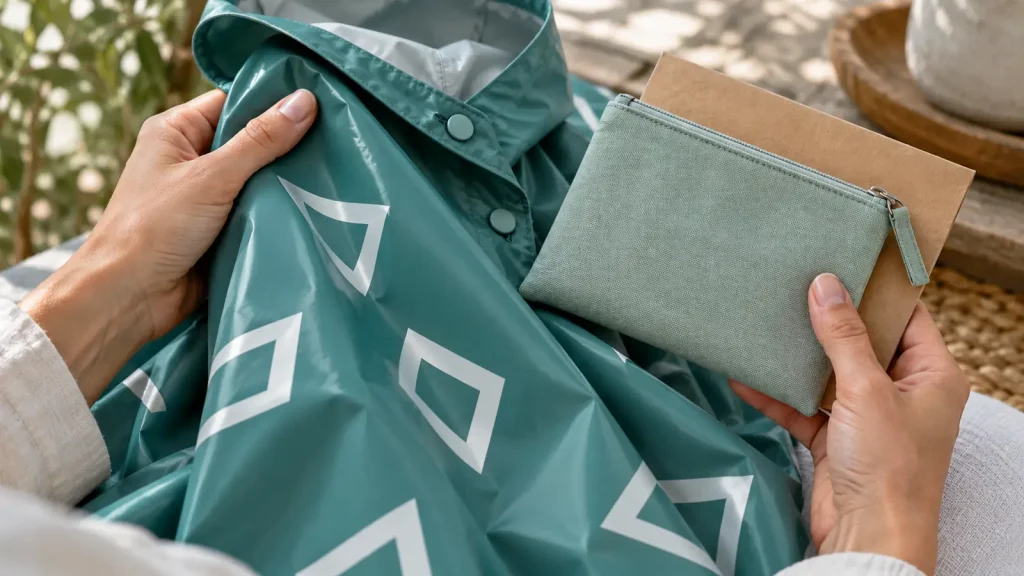
Approve artwork for the garment and the viewing situation
Custom rainwear branding begins with the place and moment in which the design will be seen. A small attraction mark, a fashion pattern and a corporate travel logo have different jobs. Describe the intended effect before choosing print dimensions or adding more decoration. The supplier needs the artwork files, colour references and placement instructions, but the buyer also needs a reason for each choice. A clear design objective helps the team compare proposals without treating a larger logo or a more complicated pattern as an automatic improvement for every market.
Review the garment's shape and folds before fixing placement. A design that looks centered on a flat digital outline may sit differently when the hood is down, the front is closed or the garment is worn over layers. Ask for the relevant decorated sample or placement proof on the proposed construction. Check the relationship to seams, openings and fasteners. Keep the artwork dimensions and reference points in the specification so the approval can be repeated. A casual instruction such as logo on the back leaves too much room for interpretation during production.
Choose the printing approach through a discussion of the actual substrate and design. Screen printing, transfer methods and other techniques have different requirements, and suitability depends on the proposed materials, inks or transfers, process conditions and intended use. Do not select a method from a generic claim that it is always best for rainwear. Ask the supplier what it proposes and what trial or evidence is appropriate. Have the relevant reviewer assess appearance and any functional concerns before treating the decoration as an approved part of the OEM Program.
Make colour approval specific. Identify the reference, the sample material and the viewing conditions the team will use. Transparent or textured substrates can influence the perceived result, and different components may not look identical even when the same reference is requested. Record acceptable appearance on the actual decorated sample rather than relying only on a screen preview. If the brand requires a particular review process, explain it before sampling. The supplier can then quote and plan the relevant development work instead of discovering an additional approval stage after the initial sample has been made.
Check the artwork across the size range and packaging views. A fixed print dimension may work well on one garment size and need discussion on another. A folded pack may hide the mark the buyer expects to show at a gift-shop display. These are practical presentation questions that should be answered with the proposed folding and packing method. Avoid approving the garment and pack as unrelated projects. Their relationship affects the first impression and can influence whether staff need to open stock to explain the product to a customer or recipient.
Lock the approved files and references before release. Give the final artwork a revision identifier and make sure obsolete files are clearly superseded in the production handover. If an event date, sponsor or destination mark changes, assess the effect on samples, packing and timing. Do not assume that replacing a small graphic is an administrative detail with no production consequence. A controlled artwork process gives the buyer a clearer record of what was accepted and helps the supplier deliver a consistent custom rainwear order across the agreed models, colours and destinations.
Choose packaging around distribution and storage
Rainwear packaging should make the product easier to carry, identify or issue. Start with the task the pack must perform. A compact holder may suit a promotional kit, a pouch may support repeat carrying and a simple sleeve may fit a fast distribution program. Each format has tradeoffs in opening, volume, presentation and handling. Ask the supplier to propose options against the actual use brief rather than choosing a novelty shape first and trying to fit the garment into it afterward. The pack and garment should be developed as a complete proposal.
Specify the packed dimensions and the condition in which they are measured. Distinguish an empty holder from a factory-folded garment and from a product repacked after use. If the item must fit a kit, display unit or shelf, provide the relevant dimensions and access constraints. Ask for a packed sample so the team can check the proposal physically. A dimensional drawing is useful, but it cannot show every opening or handling difficulty. The sample review should include the people who will actually issue, display or carry the product in the intended program.
Review the information hierarchy. The pack may need a product identity, size, use information, care guidance and any required labeling. Decide which information belongs on the individual pack and which belongs on the carton or supporting documentation. Keep the design legible at its final size. A beautiful mockup can conceal very small text when shown at enlarged scale. If the buyer has legal or technical labeling requirements, give the approved wording and review responsibility to the supplier early. Do not rely on the packing designer to infer them from a product category name.
Consider how packaging changes the order's logistics. A rigid holder, a bulky pouch or an additional presentation box can affect carton quantity, dimensions and handling. Compare the complete packed alternatives using confirmed specifications rather than assuming the garment's folded volume tells the whole story. Include any assembly or insertion work in the quotation. If the buyer will complete the kit at another location, define what arrives ready and what remains to be done. This keeps the commercial comparison aligned with the actual work required before the item is usable.
Test the pack's relationship with the intended repeat-use plan. A pouch that is difficult to reopen or repack may not support the convenience the program promises. A holder that is easily separated from the garment may need a different handling message or attachment proposal. Review any change with the technical team, including its effect on use and packing. Do not assume an added component improves the product simply because it creates another branding surface. The feature should solve a defined problem and remain practical through the user's ordinary sequence of opening, wearing and storing.
Approve packaging with the same reference discipline as the garment. Record material, dimensions, artwork, quantity per inner pack and master-carton arrangement. Keep the packed sample or an appropriate approved record available for receiving checks. If the garment changes, reassess whether the original pack still works. This is particularly important when several niche programs use a common base model with different presentation. A clear packing specification lets the buyer preserve useful shared elements while adapting the final experience to tourism, events, commuting or another industry without creating avoidable confusion in production.
Align environmental language with product evidence
Environmental wording should describe a specific, supported attribute of the proposed product or packaging. Begin by writing the exact claim the buyer wants to make and identifying what it applies to. Is the statement about the garment, the pouch, a component or the whole delivered item? Ask for evidence that matches that scope. A vague request for eco-friendly rainwear does not give the supplier or reviewer a clear question to answer. Narrowing the wording makes it easier to assess both the proposal and the information that will appear on the finished pack.
The FTC's Green Guides summary cautions against broad, unqualified environmental benefit claims and calls for clear, specific qualifications. It also explains that compostable claims need suitable evidence and may require conditions about disposal facilities. For a rainwear buyer, these principles support a straightforward approach: avoid presenting one material attribute as proof of an overall environmental advantage. Use the relevant guidance and qualified review for the intended market, then align the public wording with the exact product, evidence and disposal conditions that have actually been assessed for the proposal.
Keep the evidence review separate from the design preference. A paper sleeve, a muted colour or a reusable-looking pouch may fit a brand's visual direction, but appearance does not establish an environmental claim. Ask what the component is made from and which statements are supported. If the buyer chooses the format for presentation or handling reasons, it can describe those practical features without adding an unsupported benefit. This allows the design team to make useful choices while keeping the marketing and compliance review focused on claims that need substantiation.
Discuss the real destination process before printing disposal instructions. The venue, customer or local operator may control collection and waste handling. Ask what routes are actually available and what the relevant service accepts. Do not assume that a theoretical material property creates a usable collection route for every recipient. If the program intends to collect items, assign responsibility for the process and communication. The supplier can provide product information, but it cannot guarantee the behavior of every user or the availability of every local waste-management option after distribution.
Review repeat-use language with similar care. A garment intended for repeated use should have an appropriate construction and care plan, but that does not automatically establish a quantified environmental saving. If the buyer wants to compare environmental outcomes, it needs a suitable basis that accounts for the scope and assumptions of the comparison. Without that work, keep the description factual: explain the pack, care and intended use rather than claiming a universal reduction. This makes the product information more credible and avoids asking the reader to infer benefits that have not been demonstrated.
Keep approved claims in a register with their evidence, scope and reviewer. Link the register to the current product and artwork revision so a later material or packaging change triggers a review. The process can be proportionate to the program, but it should prevent old wording from surviving after its basis has changed. A useful environmental brief is specific enough to guide sourcing and honest enough to explain limitations. That approach helps B2B buyers discuss sustainable attributes without turning rainwear packaging into a collection of broad promises that the order cannot reliably support.
Primary references: FTC summary of the Green Guides.
Explore the practical formats in our rain poncho packaging guide. For an environmental brief, use the sustainable rainwear procurement guide to frame product-specific evidence questions.
10 / 12
Plan inventory and delivery around the industry calendar

Separate demand assumptions from purchasing commitments
Seasonal rainwear planning starts with a distinction between what the business expects and what it has committed to supply. An attraction may have attendance estimates, a fashion brand may have channel plans and an event company may have confirmed bookings. Those inputs do not carry the same certainty. Put them into separate categories before deciding on a bulk order. A useful plan shows confirmed requirements, working assumptions and contingency decisions. This helps the buyer explain why a quantity was chosen and makes later changes easier to evaluate without rewriting the history of the decision.
Use the organization's own records where available. Review previous issues or sales, stock transfers, size requests and unused balances, but check whether the next program is comparable. A changed venue, distribution policy or collection role can alter the meaning of last year's figures. Record those differences alongside the planning assumptions. Do not turn a historical average into a guaranteed forecast. The purpose of the review is to identify a reasonable basis for discussion and the factors that could make the next period different from the one used as a reference.
Build the quantity matrix at the level that affects the order. Model, size, colour, decoration and destination may each require a separate allocation. A total of several thousand garments can hide very small quantities in individual combinations. Ask the supplier how those combinations affect MOQ and the production proposal. If the matrix creates an impractical assortment, discuss alternatives while the brief is still flexible. A shared base model, a different packing allocation or a more focused colour range may be worth comparing, subject to the buyer's actual market requirements and approvals.
Consider uncertainty explicitly. A planning scenario can show what happens if demand is lower, higher or concentrated at one location, but label it as a scenario. Ask what the organization would do with surplus stock, how it would move stock between destinations and what replenishment options are realistic. These questions help the buyer understand the consequences of a quantity decision. They do not require an invented probability or industry-wide demand statistic. A simple, transparent assumption is more useful than a precise-looking forecast whose basis nobody can explain or update.
Give inventory decisions a commercial owner. The person approving a larger quantity should understand the storage, allocation and future-use implications, especially when the product carries event-specific or seasonal decoration. Keep the decision separate from a supplier's quantity-band proposal. A more attractive Bulk Pricing band does not by itself establish that the additional units are useful to the business. Compare the complete program, including the risk of an obsolete design or an unbalanced size mix. The chosen quantity should serve the operating plan rather than become the plan's only objective.
Review the assumptions at defined points before final release. If a booking, channel allocation or destination changes, update the matrix and assess the effect on quotations and approvals. Avoid changing quantities informally after the supplier has planned materials or packing. Keep the current version easy to identify and record accepted changes in writing. This approach gives the supplier a stable instruction while allowing the buyer to respond to new information. It also creates a useful record for the next cycle, when the team can compare the original assumptions with actual outcomes.
Work backward from usable stock at the final location
The date that matters to a rainwear program is often the date usable stock is available at the final location. That is different from the date production finishes or a shipment leaves the supplier. Work backward from the receiving, checking and allocation tasks the buyer must complete before use. Include any booking requirements at the warehouse or venue. A clear final-location deadline helps the supplier and logistics team discuss a realistic plan. It also prevents a shipment milestone from being mistaken for readiness simply because both are called delivery in different conversations.
List the approval steps before production. The program may need a construction sample, size review, artwork approval, packed sample and document review. Identify who owns each decision and what information starts the next step. Ask the supplier to state its lead-time assumptions and the point from which the estimate runs. If the buyer has not supplied final artwork or accepted the specification, the production clock may not mean what the sales team assumes. Put these dependencies into the schedule so a missed internal decision is visible before it affects the intended use date.
Give transport planning its own scope. Confirm the delivery basis, named locations and responsibilities with the appropriate commercial and logistics professionals. The buyer should understand which costs and activities are included in a quotation and which require separate arrangements. Avoid treating a general shipping estimate as a guaranteed arrival date. Ask what information is needed for booking and documentation, and when it must be ready. The complete packing specification, including carton dimensions and weights, belongs in this conversation because changes to it can affect the planned shipment.
Include time for receiving and resolving questions. A venue may need to check quantities and move stock to several issuing points. A brand may need to confirm labels and allocate products to channels. A relief program may need to reconcile consignments before distribution. These activities should not be squeezed into an invisible interval after the goods arrive. Ask the receiving team what it needs and make the requirement part of the schedule. Usable stock means the relevant checks and handovers have happened, not merely that cartons have reached a building.
Agree how timing changes will be communicated. A delayed artwork approval, material substitution or transport issue should trigger a review of the affected milestones and available options. Avoid relying on repeated requests to make it faster without changing the underlying plan. Ask for a clear explanation of the issue and the decisions available to the buyer. Any alternative product or packing arrangement still needs appropriate approval. Keeping that discipline under pressure helps prevent an urgent schedule from turning into an unreviewed change that undermines the original rainwear brief.
Maintain one current milestone record that both commercial and operational teams can understand. Show the latest dates, dependencies, owners and unresolved risks. Preserve the reasons for material changes rather than overwriting them without explanation. Once the order is complete, review where the schedule was realistic and where it depended on an assumption that did not hold. The findings can improve the next enquiry and its approval timetable. A well-managed timeline connects the supplier's work with the buyer's readiness, giving the program a clearer route from proposal to usable stock.
Keep replenishment options visible after the first order
Replenishment is easier to discuss when the first order leaves behind a complete reference. Keep the approved specification, artwork, size chart, packing plan and sample decisions together. Record the supplier's product code and the buyer's own reference so the relationship is clear. A repeat enquiry should identify the exact version being requested rather than use a phrase such as same as last time. People, materials and operating conditions can change. A clear reference allows the supplier to confirm what can be repeated and which parts of the proposal need a fresh review.
Ask about replenishment constraints before committing to the initial assortment. Some colours, components or packs may involve a new minimum quantity or a separate development step. The supplier should explain the basis of its current proposal without implying that future availability is guaranteed. Record which assumptions must be reconfirmed for another order. This is useful for tourism programs with several locations and brands with continuing collections. The buyer can then decide whether a highly customized feature is worth the additional planning it may require when stock needs to be replenished later.
Track stock at the level that supports decisions. A total balance may look healthy while one size or destination is short. Use the model and allocation references established during purchasing to record issues, transfers and remaining quantities. Keep the system proportionate to the operation; a simple reliable record is better than a complex report that is not maintained. The important point is to distinguish demand from movement. Stock transferred to another location is not necessarily used, and stock held centrally is not necessarily available to the person issuing garments at the point of need.
Review feedback before automatically repeating the product. Ask whether the size mix, opening method, care information and packing arrangement worked. Separate problems that require a design change from those that need a better distribution process. If a revision is proposed, assess its effect on existing stock, branding and documentation. The business may need a transition plan if two versions will be used at the same time. Clear identification helps staff explain the difference and prevents old and new specifications from becoming mixed in a single replenishment enquiry.
Consider the treatment of unused or outdated stock. An event-specific print, a changed brand identity or a revised size system can limit future use. Decide whether stock can be transferred, retained for a defined program or managed through another approved route. Do not invent a disposal or donation benefit to justify an over-order. The relevant commercial and operational teams should make a documented decision based on the actual product and available options. Those decisions provide useful feedback for the next quantity and customization strategy, especially when demand is uncertain.
Bring replenishment into the next supplier conversation with current information. Provide the requested quantity matrix, any revised destination or use, the latest approved references and the date usable stock is needed. Ask for confirmation of the specification, evidence, MOQ and delivery scope. A repeat order can be more efficient than a first development, but it still deserves a clear acceptance process. Treating replenishment as a controlled continuation helps the buyer preserve what worked while responding to changes in the market, the product and the operation that receives the rainwear.
Connect demand assumptions and approval dates with our seasonal rainwear inventory planning guide.
11 / 12
Approve suppliers and evidence before releasing an OEM program

Build a sample review that answers the market brief
A sample request should explain the decisions the sample needs to support. A buyer may need to assess fit, material appearance, decoration, packed size or distribution handling, and one early sample may not answer all of those questions. State the purpose of the requested stage and ask the supplier to identify any provisional elements. This prevents a development sample from becoming an accidental production reference. It also helps the team plan the sequence of reviews instead of discovering late that an important decision was never included in the original sample request.
Use the industry brief to choose reviewers. Tourism operations staff can assess issuing and stock identification, a fashion technical team can assess fit and finish, and a program logistics team can review allocation and packing. Keep commercial and technical responsibilities clear. A brand approval does not replace a compliance review, and a document review does not show how a pouch opens in practice. Give each reviewer a focused checklist and an agreed route for comments. This makes the sample process more useful than asking a large group whether they like the product.
Record observations in a form the supplier can act on. Identify the model, sample revision, size and the feature being discussed. Describe the relevant movement, measurement or handling step and attach a clear reference image where it helps. Avoid comments that contradict one another without a decision owner. If one department requests a longer garment and another needs a smaller pack, the buyer should resolve the priority rather than sending both instructions as if they can be implemented independently. The sample review is a decision process, not only a collection of opinions.
Keep appearance checks and functional evidence distinct. The team can assess the look of a seam or print, but that observation does not establish every performance claim associated with the garment. Ask the technical reviewer what additional evidence is appropriate to the intended use and wording. Where testing is required, agree the method, sample identity and acceptance criteria through the relevant process. Do not create a dramatic informal demonstration and treat it as a substitute for suitable evidence. A useful approval record says what was checked and avoids implying that unrelated properties were established at the same time.
Assess revisions against the whole product. A changed closure may affect packing, a revised hood may affect the silhouette and a different material may affect decoration. Ask the supplier to identify linked changes and give the relevant reviewers a chance to assess them. Keep approved and pending items visible so the process does not restart unnecessarily or close prematurely. When the sample is accepted, record the exact reference and any allowed deviations. Make sure the purchase documentation points to that version rather than an earlier sample that happened to be photographed more often.
Use the final sample record during receiving and future development. It should help another colleague understand what the buyer intended, even if they were not present at the review. Preserve relevant dimensions, artwork, packing and evidence references alongside the decision. If the delivered product raises a concern, compare it with the agreed requirements and circumstances rather than relying on memory. A disciplined sample process gives niche rainwear programs a practical link between the market brief and the bulk order, allowing design judgment and operational needs to become instructions the supplier can consistently understand.
Match documentation to the exact product and destination
Documentation is useful when it answers a defined question about the product being purchased. Begin with the intended use, wearer group, destination and claims, then ask the responsible technical or compliance reviewer to identify the applicable requirements. Avoid requesting every certificate a supplier has without explaining what the order needs. A large folder can look reassuring while containing documents for different models, materials or activities. The buyer needs relevance and traceability, not simply volume. A focused evidence request also gives the supplier a clearer basis for explaining what is available and what needs further assessment.
Connect each document to the proposed product configuration. Review model references, material descriptions, dates, issuing organizations and the scope stated in the document. If a reference differs from the buyer's model code, ask for a clear explanation of the relationship. Do not assume that a report for a base material automatically covers the finished decorated garment or every accessory. The qualified reviewer should decide what the evidence supports. Keep any limitation visible in the approval record so the marketing and commercial teams do not later turn a narrow finding into a broader claim.
Treat destination changes as a review event. A product offered in another territory may require different labeling, documentation or assessment, depending on its classification and use. The supplier's general export experience does not remove the buyer's need to understand its own responsibilities. Involve the appropriate specialists and confirm the current requirements through primary sources or professional advice where necessary. This guide provides a purchasing framework, not a determination that a particular rainwear model complies with every market. The final decision must relate to the actual product and intended supply arrangement.
Keep safety and chemical claims specific. Terms such as compliant, non-toxic or certified can imply more than the supporting evidence establishes if they appear without scope. Ask what requirement, substance restriction, test or certification the statement refers to and which product it covers. Review the exact public wording with the relevant team. A buyer can describe confirmed features and provide appropriate information without using broad claims as a substitute for evidence. Where the product is intended as protective equipment or for children, give the classification and requirement review the attention those uses demand.
Set a document review deadline before production or shipment decisions depend on it. The right point varies with the requirement, but it should not be left as an undefined task to complete after goods are already committed. Record who accepts the evidence, who resolves questions and how updates are tracked. If a material or component changes, ask whether the evidence remains applicable. Keep the current version connected to the sample and order references. This helps prevent a perfectly organized document folder from describing a configuration that is no longer the one being supplied.
Store the approved evidence in a way the receiving, customer service and future procurement teams can use. Preserve the original documents and the review conclusions rather than reducing them to a single yes-or-no label. If a later enquiry arises, the team should be able to see what was assessed and why the decision was made. This record also makes repeat orders more efficient while preserving the need to check changes. Good documentation supports a clear, bounded product decision; it should never be used to create an impression of capabilities or approvals that have not actually been established.
Assign responsibility for changes and receiving decisions
An OEM rainwear program needs a clear route for decisions after the initial approval. Changes can arise from artwork, materials, size allocations, packing or delivery requirements. State who may request a change, who evaluates it and who gives final acceptance. The supplier should not have to decide which of several buyer contacts has authority when their instructions conflict. A simple responsibility list can prevent considerable confusion. It also helps the buyer distinguish an informal suggestion from an approved revision that should affect production and the purchase documentation.
Use a change record that describes the reason, affected references and consequences. A proposed substitution should identify what changes and what remains the same, together with any implications for evidence, samples, cost or timing. Ask the relevant reviewers to assess those effects before acceptance. Do not assume that a small physical change has a small practical impact. A different pouch can alter packing and identification, while a revised closure can affect use. The decision should be based on the actual proposal rather than the supplier or buyer's shorthand description of it as equivalent.
Give receiving teams the information they need before goods arrive. Provide the current model and packing references, expected quantities, identification system and relevant acceptance instructions. Explain where to record discrepancies and whom to contact. The receiving plan should distinguish routine checks from technical judgments that require another reviewer. Staff should not be expected to infer a compliance decision from a carton label or accept a substituted model because the shipment is urgently needed. Clear responsibilities support a timely decision while keeping the limits of each person's role visible.
Agree how questionable stock will be identified and managed pending review. The process should fit the organization and the nature of the concern, but it needs to prevent uncertain items from being mixed into approved supply without a decision. Record the relevant carton or lot references and a clear description of the issue. If photographs are useful, capture the product and identification details rather than unrelated personal information. This gives the supplier and buyer a common basis for investigation and reduces the chance that a concern becomes impossible to trace after distribution begins.
Keep the resolution linked to the original requirement. A supplier explanation, replacement proposal or accepted deviation should be recorded with the person who approved it and the scope of that approval. If the decision affects product information or future orders, update the relevant references. Do not let a one-time concession silently become the new specification. The organization may choose to accept a particular variation under defined circumstances, but the next order should still state what is required. Preserving that distinction makes commercial relationships clearer and helps both parties learn from the issue.
Close the order with a brief review of decisions, not only a delivery confirmation. Identify which requirements were met, which exceptions occurred and which changes should be carried into the next brief. Separate supplier performance from internal delays or distribution problems so the conclusions remain fair and useful. Keep the approved records available for repeat purchasing and relevant customer questions. A clear responsibility structure does not make every rainwear order effortless, but it gives the buyer a practical way to handle change without losing the connection between the original industry need and the product ultimately supplied.
Organize product and destination evidence with our rainwear safety standards and compliance guide. Ask the responsible reviewer to confirm the requirements for your actual configuration and market.
12 / 12
B2B FAQ: choosing bulk rainwear for niche markets

Can one rainwear model serve several industries?
One base model may serve several programs when their actual requirements align, but the industry labels alone are not enough to establish that fit. Compare the wearer group, use duration, movement, clothing layers, distribution method and intended claims. A tourism contingency program and an outdoor celebration may share some needs, while a commuter collection or specialized work task may introduce different ones. Start with the common specification, then list the requirements that differ. This allows the buyer to explore consolidation without assuming that a convenient sourcing arrangement automatically makes the product suitable everywhere.
Check the full configuration, including decoration and packaging. Two programs may use the same base garment but different pouches, instructions or size allocations. Those differences can affect the quote, sample approval and evidence review. Give each finished version a clear reference and record its relationship to the shared model. This is more reliable than calling all of them the same poncho. It helps the supplier understand which elements are fixed and which are variable, and it gives receiving teams a practical way to identify the version intended for each destination or customer.
Use a hypothetical comparison to test the idea. Suppose a buyer manages an attraction program and a corporate travel kit. The attraction may need fast size identification and cartons that support frequent replenishment. The travel kit may need a compact pouch that fits a defined compartment and can be repacked after use. A shared garment might work, but the pack and handling requirements may differ. The buyer should compare the complete proposals and sample both experiences. Combining the orders is useful only if the resulting arrangement meets both briefs and remains clear to the teams using it.
Do not carry approvals across different wearer groups or protective uses without review. A youth version, a product for another destination or a garment promoted for a specialized task may need different design and evidence decisions. The common material or visual identity does not settle those questions. Ask the relevant technical and compliance reviewers what can be reused and what needs reassessment. This keeps consolidation focused on legitimate shared elements while protecting the distinct requirements of each program. It also prevents a broad marketing description from implying that one model has universal suitability.
Compare the commercial benefits with the operational costs. Shared production may be worth exploring, but the buyer should understand minimum quantities, setup scope, packing work and replenishment implications for the actual proposal. A common model can simplify one part of the order while making allocation more complicated elsewhere. Ask the supplier to show the assumptions in writing, then review them with the receiving and distribution teams. Avoid declaring savings before the complete comparison is made. The goal is a manageable program with useful commonality, not a single product code at any cost.
If the comparison supports a shared base model, document the decision and its limits. Keep a master specification for the common construction and separate records for each finished version. Revisit the arrangement when the use, destination, material or claims change. This approach allows a B2B buyer to build a coherent rainwear portfolio without treating every new application as a completely new development. It also leaves room to select a different model when the evidence shows that the shared option no longer serves the new market's practical needs.
How should buyers compare MOQ and Bulk Pricing?
Compare MOQ and Bulk Pricing only after the proposed order is defined clearly enough for suppliers to quote the same scope. State the model, material, sizes, colours, decoration, individual packing, carton arrangement and delivery basis. Ask whether the minimum applies to the total order, each model, each colour or another production grouping. Different answers can change the usefulness of a proposal even when the total quantity appears similar. A buyer should understand the structure before deciding that an offer has a low or flexible minimum for the intended program.
Use quantity bands to explore options, but keep each band tied to the same specification unless an alternative is clearly identified. A larger quantity may be quoted with different packing or production assumptions, so read the details rather than comparing only a total. Ask for setup, sampling and special requirements to be identified where relevant. The purpose is to understand the complete commercial commitment without publishing retail unit prices. A private quotation can support a serious B2B discussion when its inclusions, exclusions and assumptions are visible to the people approving the order.
Bring the assortment matrix into the comparison. A total quantity spread across many sizes, colours and designs may create a different production requirement from the same quantity in one configuration. Ask the supplier to explain its proposal for that actual mix. If the arrangement is impractical, discuss alternatives such as a more focused launch assortment or common packaging elements, subject to the market brief. Do not let a convenient minimum erase an essential fit or identification requirement. The buyer needs a proposal that can be used, not merely an order size that can be accepted.
Consider the business consequences of ordering more. Additional stock may support several locations or future programs, but it may also require storage and carry a risk of becoming unsuitable after a design or event changes. Use the organization's own allocation plan and label assumptions about future demand. A quantity-band incentive does not establish that surplus units will have a useful destination. Compare the extra commitment with realistic replenishment options and the flexibility of the product. This keeps the purchasing decision connected to the industry program rather than treating quantity as an isolated measure of value.
Review timing alongside commercial scope. A proposal with an acceptable minimum may still require material sourcing, artwork approval or special packing that affects the schedule. Ask what starts the lead time and what must be supplied by the buyer. Confirm the date usable stock is needed at the destination and include receiving requirements. If the buyer considers an alternative to meet timing, evaluate its specification and evidence through the same approval process. Urgency should lead to a clearer choice between defined options, not to an unexplained reduction in the product's agreed requirements.
Make the final comparison understandable to another decision maker. Show the configuration, quantity matrix, commercial scope, timing assumptions and unresolved questions on one current record. Explain why the selected proposal fits the program and which alternatives were considered. Preserve the accepted quotation with the specification and sample references. This gives the supplier and buyer a shared basis for the order and makes later changes easier to assess. MOQ and Bulk Pricing are useful parts of that decision, but their value depends on the complete rainwear program they are being asked to support.
What should a buyer send before requesting an OEM proposal?
Send a concise description of the market and the intended use first. Explain who will wear the product, what they will do in it, what clothing or bags it needs to accommodate and how it will be distributed. Name the destination markets and the date usable stock is required. These details help the supplier propose a relevant starting point rather than guess from a request for custom rainwear. The brief does not need to be perfect before the first conversation, but it should distinguish confirmed requirements from questions the buyer wants help exploring.
Add a preliminary quantity matrix. Show expected quantities by model, size, colour and destination where those decisions are known. Mark estimates as estimates and explain which combinations are essential. If the buyer is open to alternatives, identify the boundaries: a neutral colour might be flexible while a defined size envelope is not. This gives the supplier room to suggest a workable proposal without removing a requirement the buyer considers mandatory. It also makes MOQ and Bulk Pricing discussions more useful because they refer to a recognizable order rather than an unspecified total.
Provide the design information that is ready. This may include original artwork, colour references, desired placement and a description of the intended silhouette or pack. Label provisional concepts so they are not mistaken for final production files. Explain who owns brand approval and whether a decorated sample is needed before release. If the buyer uses reference images, identify the features being discussed and develop an original specification. The supplier should understand the design direction without being asked to copy another company's product or infer precise dimensions from an inspirational photograph.
List the technical and evidence questions that the program must resolve. Include relevant material preferences, fit requirements, care expectations and any destination or use-specific review needs. Ask the responsible technical or compliance team to identify mandatory requirements rather than relying on a broad request for all certifications. A supplier can then explain what information is available for the proposed model and what may require further assessment. Keep the evidence connected to the product configuration. This helps prevent a general company document from being treated as proof of a claim about a specific finished garment.
Describe the packaging and receiving plan. State whether the product will be issued individually, included in a kit, displayed at an attraction or allocated across several locations. Provide any fixed packed dimensions, labeling needs and carton-handling constraints. Ask for a packed sample when the distribution experience is important to the decision. Identify the person who will review the pack and the person who will receive the order. These practical details allow the supplier to quote the complete job and help the buyer avoid discovering extra sorting or assembly work after delivery.
Finish with a clear approval path and a request for written assumptions. Name the commercial contact, technical reviewer and final decision owner, and indicate the milestones the proposal needs to support. Ask the supplier to identify exclusions, alternatives and information still required from the buyer. Then use the response to refine the brief, compare samples and agree the final specification. A strong OEM enquiry is a useful conversation starter, not a collection of impressive adjectives. It gives both parties enough shared context to develop a rainwear program that fits the market, the wearer and the order process.
Bring your industry brief into the wholesale rainwear sourcing and logistics guide, and use the product and material guide to complete the construction shortlist.